Many companies have experimented with artificial intelligence over the past two years. Writing texts, summarizing meetings, drafting emails, generating code: much of this now works surprisingly well. And yet, after the initial successes, the same question often remains: Where does the real, sustainable added value actually arise?
According to the recently published Atlassian AI Collaboration Index, 96% of leadership do not yet see a noticeable ROI from the use of artificial intelligence.
The next AI boost will not come from better prompts, but from better context.
Philipp Göllner, XALT Founder & CEO
The answer to how to create measurable added value through AI became very tangible at the Atlassian Community Event in Leipzig in February. In his presentation, Philipp Göllner, XALT founder and AI enthusiast, showed why the next big developmental step in AI does not come from even better individual answers. The real lever lies elsewhere: in context, integration, and agency.
Because companies don't need AI that just sounds good. They need systems that understand who wants to know something, what a team is working on, which information belongs together, and what action should follow as a result. That is exactly where the next phase of enterprise AI begins: Agentic AI.
The first wave of AI was useful but too generic
The first phase of AI adoption was characterized by experimentation. Companies tested chatbots, copilots, and assistants. The results were often impressive, but also limited. This was because many answers remained too general, lacked integration, and were too far removed from the actual work context.
The problem is not the quality of the models. The problem is that, without the right context, a model often just formulates things very convincingly without actually providing precise help.
That is exactly why the focus is shifting now. No longer just: What can the model do? But rather: What does the model know about my work reality?
The real progress is called context
During the presentation, one central point became very clear: AI only becomes truly valuable in everyday business life when it does not work in isolation, but rather in context.
Who worked on which ticket? Which documents belong to it? Which decision was made when? What information is located in Jira, Confluence, SharePoint, Slack, or other systems? And very importantly: What content is a user even allowed to see?
These questions are crucial. Because they turn a generic AI answer into reliable support in everyday work.
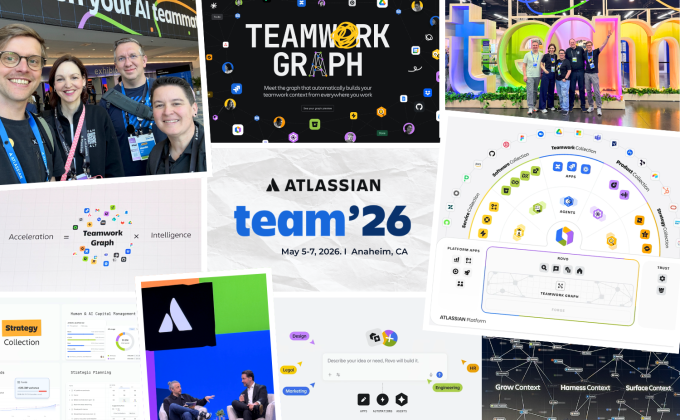
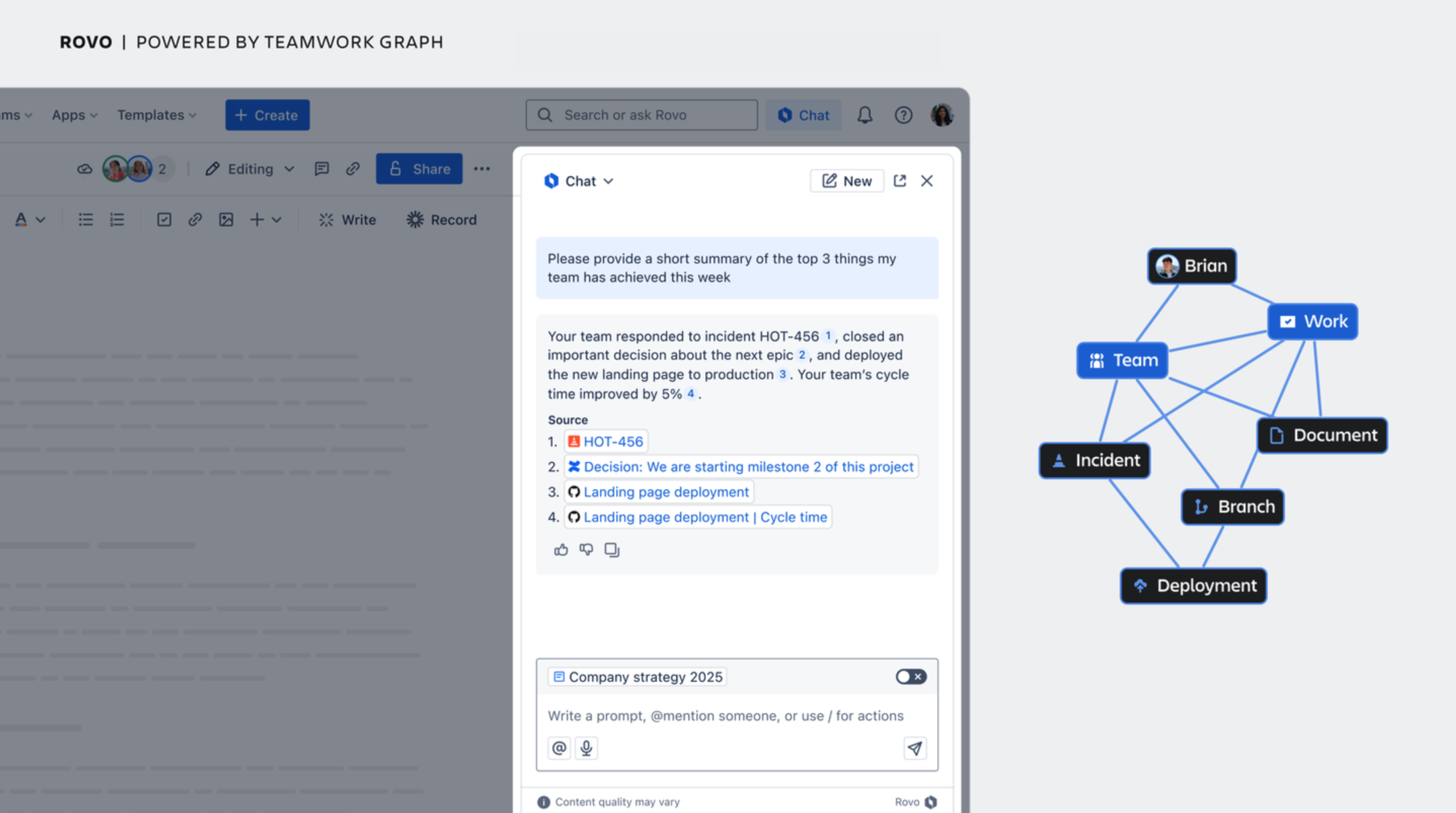
This is exactly where the strategic focus of many platforms in the enterprise market currently lies. It is about bringing together knowledge, work, communication, and permissions so that AI doesn't just generate content, but becomes operational. In the Atlassian ecosystem, Rovo AI uses the Teamwork Graph (Atlassian's data and relationship layer) to understand people, tasks, tools, and assets in context, enabling precise answers and efficient collaboration.
What is Agentic AI? The real paradigm shift
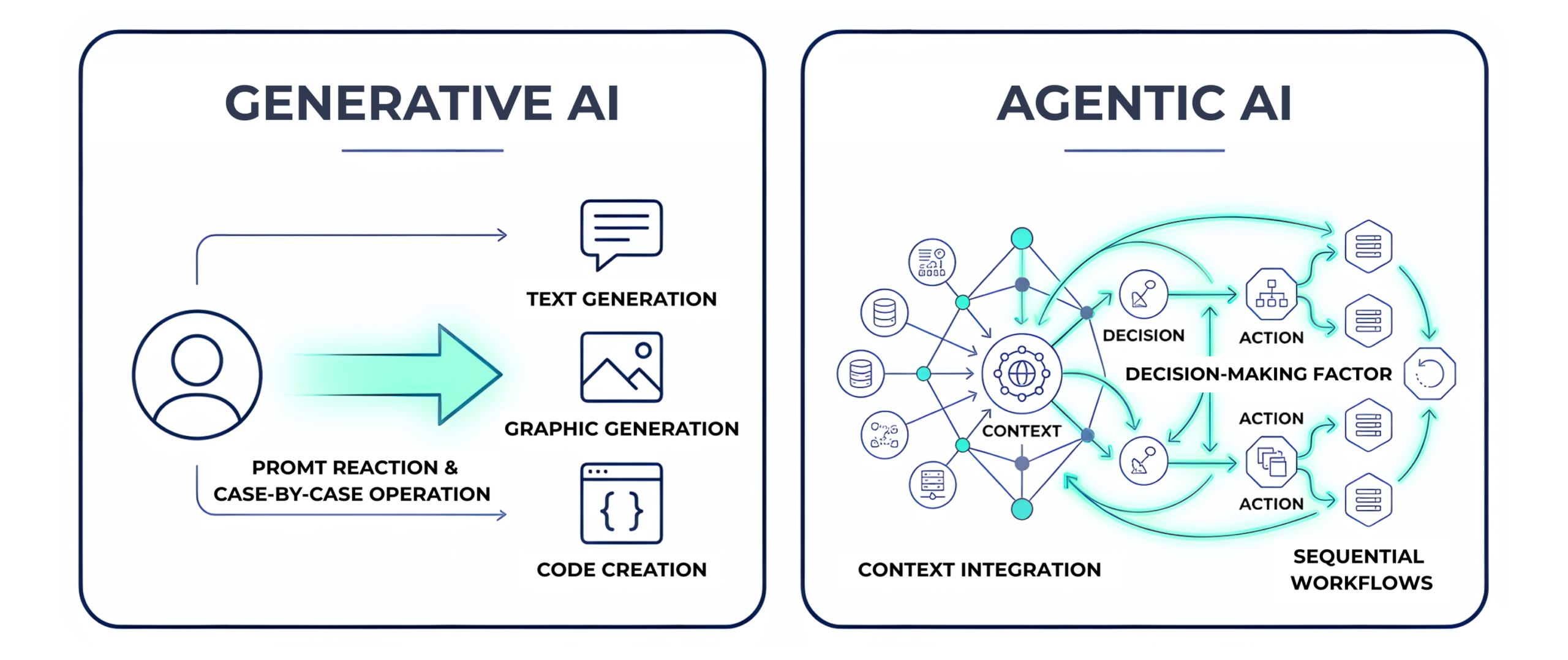
Perhaps the most exciting aspect of current developments is the transition from classic generative AI to Agentic AI. This is more than just a buzzword. It refers to an AI that doesn't just react to questions, but provides active support within defined boundaries: it gathers context, prepares decisions, drafts summaries, triggers actions, and takes over operational intermediate steps.
This fundamentally changes the role of AI. It is no longer just a tool for individual answers, but is becoming part of the workflow. Instead of simply generating content, it performs preparatory or executive tasks and relieves people in their daily processes.
Philipp Göllner, XALT Founder & CEO
Typical practical examples show what this looks like in practice:
- Automatic summaries of team performance,
- Drafts for Weekly Updates or Townhalls,
- recognizing connections between processes and documents,
- the preparation of communication based on current work statuses
- or triggering downstream actions via integrated workflows.
This is highly relevant, especially in the enterprise and service management context. Because in those areas, it is rarely just about knowledge-based questions. It is about recurring tasks, status queries, handovers, approvals, documentation, and coordination between teams. It is precisely in these areas that AI agents deliver their greatest value, because they don't just provide information, but actively support the next logical step in the process.
Why this is becoming a crucial issue right now
The fact that this development is now gaining momentum is no coincidence. Three things are currently coming together.
- Modern models can process significantly more context than they could a short time ago. This means that not only individual questions, but also entire work contexts, documentation and histories can be taken into account to a greater extent.
- The hurdle to building the first prototypes is falling. What used to be a separate development project can now often be implemented much more quickly as an initial use case. This massively changes the pace of innovation.
- Companies are increasingly willing to see AI not just as a productivity gadget, but as a structural lever for processes, collaboration and service organizations.
What is really changing in practice
What was particularly strong about the presentation was the large number of practical examples. Not as a show effect, but as an indication of a larger pattern.
Today, AI helps to automatically prepare team updates, derive communication from the work context, build small integrations faster, automate routine processes or make information usable across systems.
The point behind this is strategically more important than any individual example: AI doesn't just reduce effort, but shortens the path from an idea to an actionable solution.
This is particularly relevant because many companies do not fail due to a lack of ideas, but because it takes too long to implement them. When AI helps to make problems visible, testable and communicable more quickly, technology suddenly becomes a real organizational lever.
Vibe coding is not the goal - but a signal
A term that repeatedly surfaces in the context of this development is Vibe Coding. It refers to the rapid, often dialogue-based creation of prototypes with AI support.
You can like this term or not. What is more important is what lies behind it: the barrier to entry into software development is falling. People who previously had ideas but no direct means of implementing them can now visualize initial solutions much more quickly.
This does not replace clean software development. It does not replace architecture. And it does not replace governance. But it does significantly change the early phase of innovation.
Abstract requirements suddenly become tangible prototypes. Long discussions become testable hypotheses. And for many companies, this represents greater progress than any individual model improvement.
Without governance, new freedom quickly turns into new chaos
As great as the opportunities are, the second side of the coin is also clear. If more people are able to build solutions, automation and small applications themselves, the Need for governance.
This concerns data, access rights, compliance, security checks, order processing, integration control and operational capability. In the enterprise environment in particular, this is not a side issue, but a prerequisite for turning AI initiatives into resilient solutions.
The correct reaction to this new speed is therefore not to prevent experiments. The right reaction is to create clean spaces for experiments — and to define clear transitions into productive environments.
Sandbox first. Governance afterwards. Production only with guard rails. This is exactly how AI dynamics do not become shadow IT, but real transformation.
Why ITSM and service management in particular benefit
For IT Service Management and Enterprise Service Management, this development is particularly interesting. Because this is where recurring tasks, documented processes, and a high need for coordination come together.
Incidents, requests, changes, knowledge articles, approvals, handovers or status communication: all of these areas are predestined for context-based AI support.
The big advantage is that service management works in a highly structured way anyway. This means that AI can not only generate texts, but also better categorize processes, prepare communication and accelerate operational processes.
This is precisely why the topic is currently so relevant for IT organizations. Not because AI is suddenly taking over everything. But because it removes friction in the right places.
Companies should not think smaller now, but more ambitiously
Perhaps the strongest message from the presentation was ultimately not technological, but organizational: Bring bigger problems.
This is an important idea. Many companies have so far mainly used AI to speed up existing work. This makes sense, but often falls short.
The greater leverage lies in the questions that were previously too time-consuming, too complex or too inconvenient.
- Which internal processes are unnecessarily complicated?
- Where is knowledge lost in handovers?
- What kind of communication costs hours every month without creating any real added value?
- Which services could be significantly more user-friendly if context and automation worked together properly?
Anyone who only sees AI as an efficiency tool is underestimating its potential. Those who link it to real business problems use it strategically.
Conclusion: The next AI push is context-based, agentic and workflow-oriented
Philipp Göllner's presentation at the Atlassian Community Event in Leipzig made exactly this shift tangible. The future of AI in the enterprise does not lie in the next tool that writes better texts. It lies in systems that understand context, prepare work, and relieve teams along real processes.
For companies, this means a clear change of perspective. Away from the fascination with individual model capabilities. Towards the question of how work context, knowledge sources, authorizations and processes can be connected in such a way that productive benefits are created.
The next AI phase will therefore not simply be generative. It will be context-based, agentic, and deeply anchored in workflows. That is exactly where the difference between an exciting experiment and real business added value arises.
Would you like to find out how AI agents, context data and modern service processes can be put to good use in your company? Let's look at your use cases together and find out where AI can already create real added value today.