Customer portals are essential tools for companies that want to optimise processes, increase customer satisfaction, and reduce costs. However, not all portals are the same. From Enterprise Service Management (ESM) portals to self-service platforms, ticketing systems, and AI-driven chatbots – each variant has its specific benefits. In this guide, you will learn about the different customer portal variants, when they should be used, and why they are relevant for your company.
What customer portal variants are there?
1. Enterprise Service Management (ESM) portals
What is it?
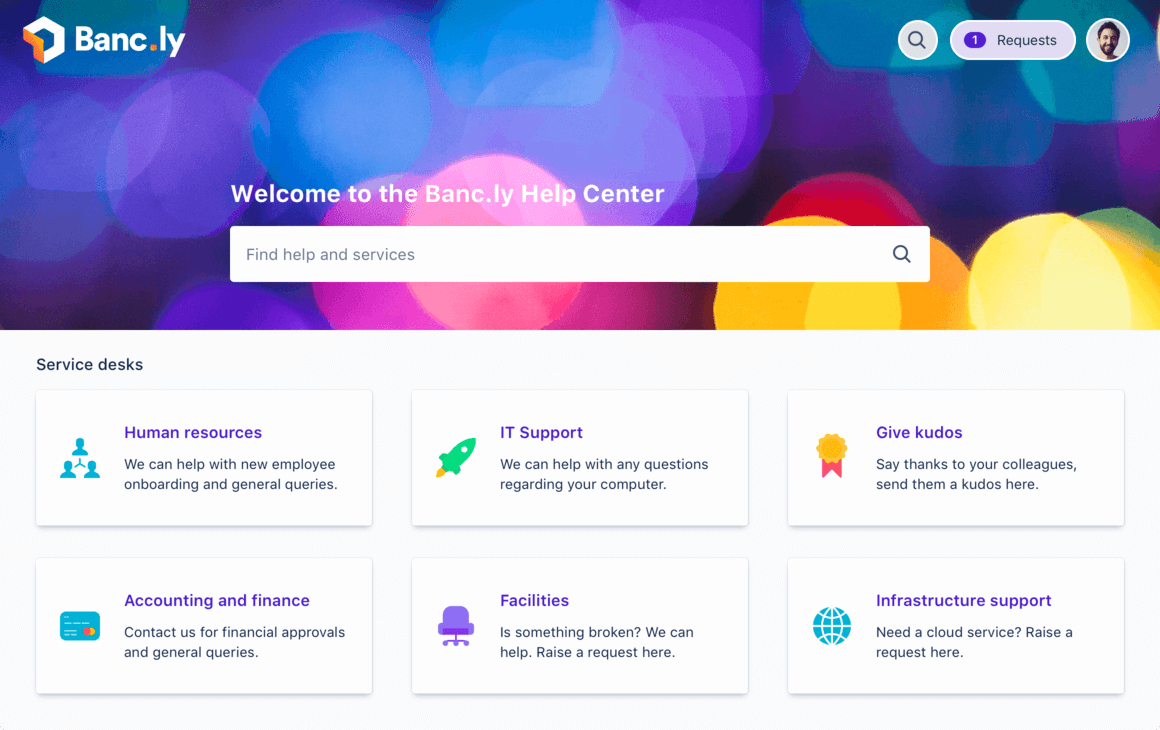
Enterprise Service Management (ESM) portals apply the principles of IT service management (ITSM) to other departments such as HR, finance, and facility management. They centralise service requests, automate workflows, and provide a unified platform for collaboration between departments.
Who is it suitable for?
These portals are ideal for medium to large enterprises that need to improve their cross-departmental workflows and manage growing demands for quick, hassle-free support.
When should you use it?
- Cross-departmental collaboration: When departments such as HR, IT, and Facility Management collaborate during employee onboarding or procurement.
- Complex workflows: When multi-step processes (e.g., employee onboarding) need to be automated and tracked.
- Growth and scaling: When your company is growing and manual processes are no longer sufficient.
Why is it important?
- Efficiency: Automates recurring tasks, reduces manual effort by up to 40%, and accelerates service delivery.
- Transparency: Real-time dashboards display the status of requests and bottlenecks.
- Employee satisfaction: Employees can resolve issues faster, which boosts satisfaction and productivity.
Example
A global manufacturing company implemented an ESM portal to optimise IT and facility requests. As a result, tickets were processed 30% faster and operating costs were reduced by 20% in the first year (Gartner, 2023).
Vendor recommendation
- Atlassian Jira Service Management: One of the best solutions for ESM portals. It offers powerful automations, integrations with Atlassian tools such as Confluence and Jira Software, and user-friendly dashboards for managing workflows.
- ServiceNow: A comprehensive ESM tool with scalable features, specifically tailored for large enterprises.
2. Self-Service Portals
What is it?
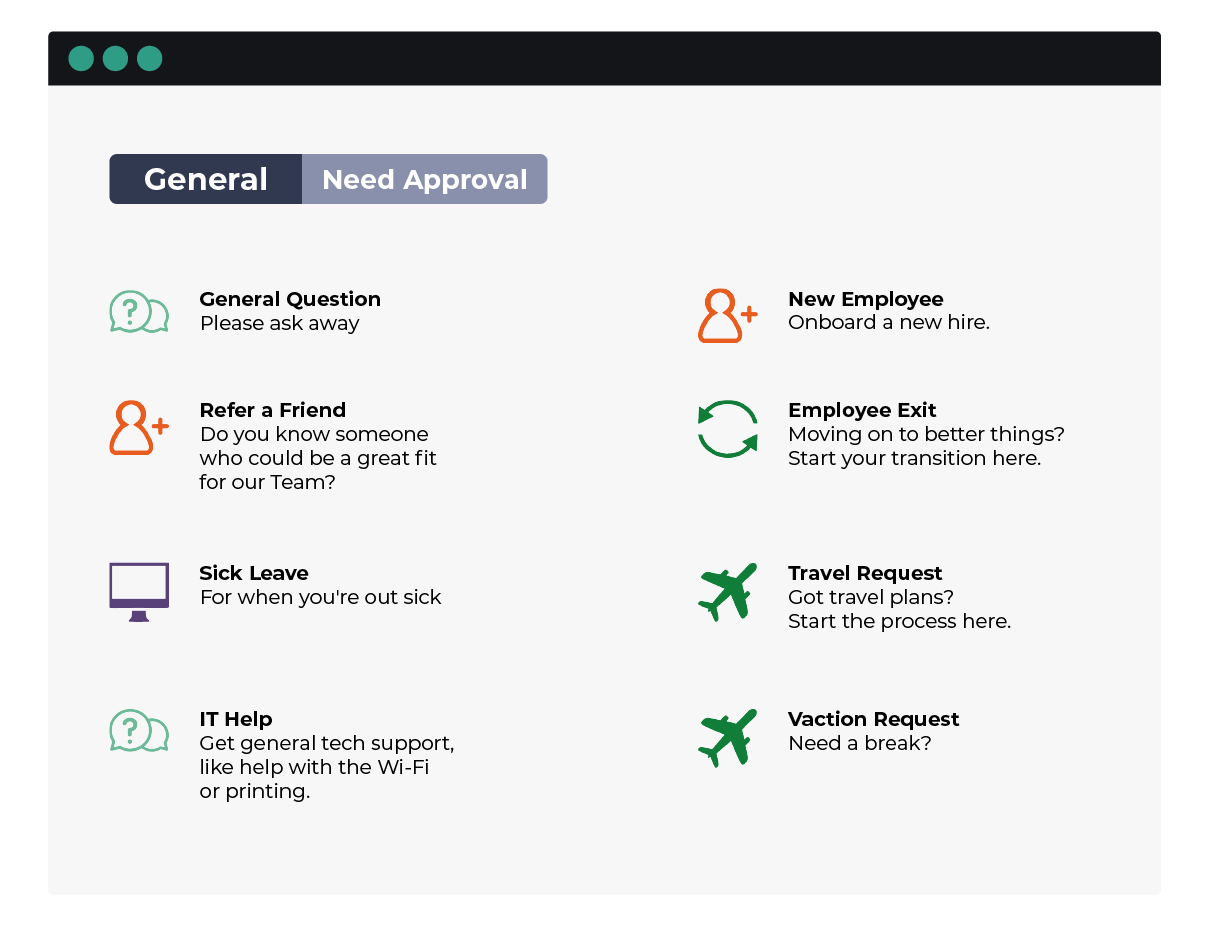
Self-service portals enable employees or customers to resolve issues independently by using FAQs, knowledge bases, and guides. These platforms provide 24/7 access to features such as account management, order tracking, and support requests.
There are two main variants:
- Internal self-services: Promote the autonomy of your employees, improve compliance, and increase transparency through a central platform.
- External self-services: Enable customers to help themselves without waiting for a response from the support team. This eliminates direct contact with support teams, relieving them and improving the customer experience.
Who is it suitable for?
- B2C companies with a high volume of inquiries.
- B2B companies that want to offer employees automated services for recurring tasks, or want to provide app users (SaaS) with the ability to resolve recurring support requests independently.
When should you use it?
- High ticket volume: When your support team is overwhelmed with recurring inquiries.
- Customer empowerment: When customers or internal employees prefer to look for solutions themselves (88% of customers prefer self-service according to Forrester, 2022).
- 24/7 support: When you need to handle inquiries around the clock.
Why is it important?
- Cost savings: Reduces ticket volume by 55% and support costs by 75% (Zendesk, 2023).
- Customer satisfaction: Provides immediate answers and improves the Net Promoter Score (NPS) by 15 points.
- Scalability: Handles a growing number of users without additional staffing.
You can find a detailed report on self-service portals here: Self-service: Meaning and challenges.
Example
BSH's self-service portal reduced the provisioning time for AWS accounts from weeks to just one hour. This allowed developers to deliver products and features faster.
83% of executives believe that between 20% and 40% of customer service demand will shift from customer support to self-service. (Gartner, 2024)
Vendor recommendation
- Atlassian Confluence: An intuitive platform for knowledge management, seamless integration with Jira Service Management, and powerful search functions.
- Zendesk Guide: A flexible self-service tool that helps customers find their own answers while reducing the workload on the support team.
3. Ticketing Systems
What is it?
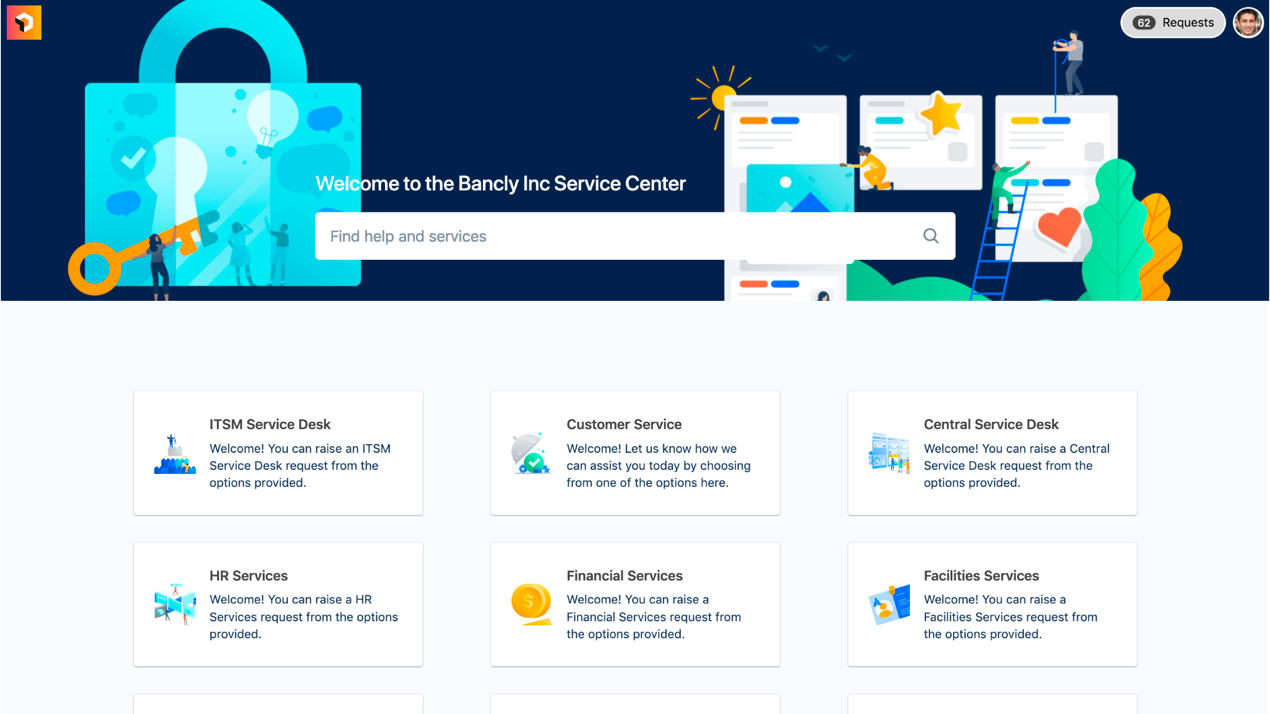
Ticketing systems automate the creation, routing, and resolution of support requests. They often integrate with CRM tools to ensure context-aware support and streamline workflows.
Who is it suitable for?
Businesses with dedicated support teams or IT departments that manage requests across multiple channels.
When should you use it?
- High-priority requests: When urgent issues require immediate attention.
- Multi-channel support: When requests come in through various channels such as email, chat, and phone.
- Performance monitoring: When you want to track KPIs such as resolution times and customer satisfaction.
Why is it important?
- Efficiency: Automates ticket routing and reduces resolution time by 37% (HubSpot, 2023).
- Accountability: Measures employee performance and ensures that no requests are lost.
- Customer insights: Analyses ticket data to identify recurring issues and improve products.
Example
Cisco automated 50% of its tickets, saving $8 million per year and increasing customer satisfaction by 20% (Cisco Case Study, 2023).
Vendor recommendation
- Atlassian Jira Service Management: With features such as SLA tracking, automation, and integrations with CRM systems, Jira, etc., it offers seamless ticket handling.
- Freshdesk: A user-friendly ticketing solution specifically designed for small and medium-sized businesses.
4. AI Chatbots
What is it?
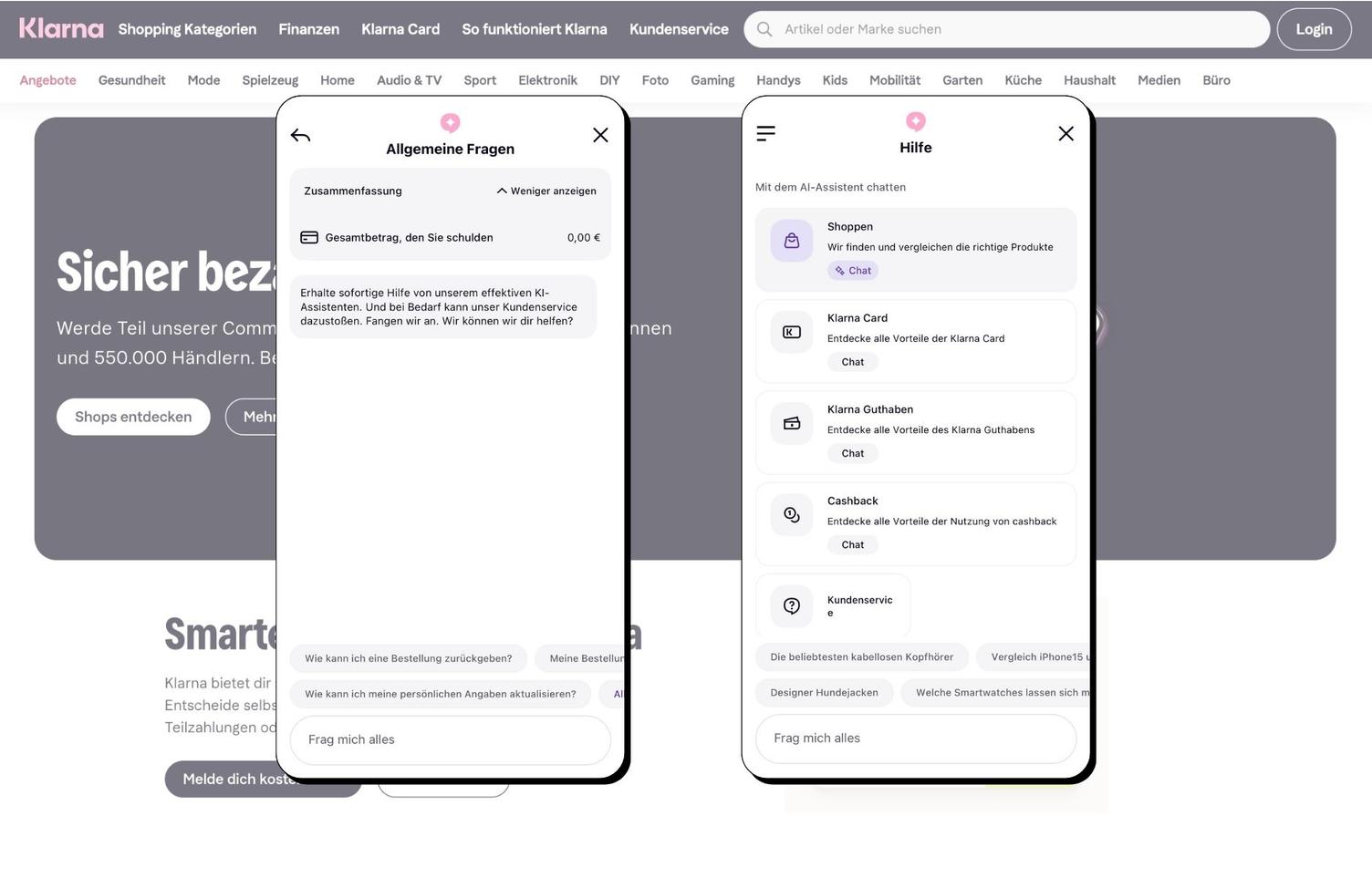
AI chatbots use Natural Language Processing (NLP) to answer queries, resolve issues, and route complex matters to the right employees. With predictive analytics, they continuously improve service quality.
Who is it suitable for?
Perfect for e-commerce platforms, SaaS companies, and large organisations that want to reduce support costs and provide 24/7 support.
When should you use it?
- High request volume: When your team is overwhelmed by the number of requests.
- 24/7 availability: When users expect answers outside of business hours.
- Need for personalisation: When you want to personalise answers based on user history.
Why is it important?
- Cost efficiency: Resolves 50% of requests without human intervention and saves up to USD 0.70 per interaction (McKinsey, 2023).
- Speed: Provides instant answers and reduces wait times by 90%.
- Scalability: Handles thousands of simultaneous conversations smoothly.
Example
H&M's chatbot handles 89% of returns, reduces call centre costs by 30%, and improves customer satisfaction (Forbes, 2023).
Vendor recommendation
- Atlassian Intelligence & Rovo: An effective chatbot solution that integrates seamlessly with Slack and Microsoft Teams. Atlassian also offers a chatbot with Jira Service Management that is integrated directly into the service management system, enabling automated interactions and smooth escalation to human agents.
- LivePerson: An AI-driven tool that focuses on personalised customer experiences.
5. Customer Support Portals
What is it?
Customer support portals combine ticketing systems, knowledge bases, and live chat to provide comprehensive support. These portals also offer secure document sharing and role-based access, making them ideal for sensitive industries such as finance and healthcare.
Who is it suitable for?
This customer portal variant is for companies in the finance and healthcare sectors or organisations that require secure, cross-channel support systems.
When should you use it?
- Complex problems: When users need a mix of self-service and human support.
- Secure interactions: When sensitive data requires encryption and role-based access.
- Omnichannel support: When users expect seamless transitions between different channels.
Why is it important?
- Unified experience: Combines all support channels on a single platform and reduces inefficiencies.
- Security: Protects sensitive data with encryption and multi-factor authentication.
- Customer loyalty: Resolves issues faster and increases customer retention by 25 %.
Vendor recommendation
- Atlassian Jira Service Management: A comprehensive solution that combines ticketing, knowledge management, and integrations with live chat tools.
- Zoho Desk: An affordable platform with extensive features for small to medium-sized businesses.
- Zendesk: One of the most well-known customer support platforms, offering powerful features for ticketing and omnichannel support.
- Salesforce Service Cloud: A comprehensive solution that offers AI-driven analytics and seamless integration with the Salesforce CRM.
How to choose the right portal: A decision framework
- Identify pain points: Are your teams overwhelmed with manual tasks? Then choose an ESM portal. Are customers frustrated by slow responses? Rely on a self-service portal or chatbot.
- Define goals: Prioritise cost reductions with self-service portals or chatbots. Focus on productivity with ESM portals. Also consider AI readiness to benefit from future advancements.
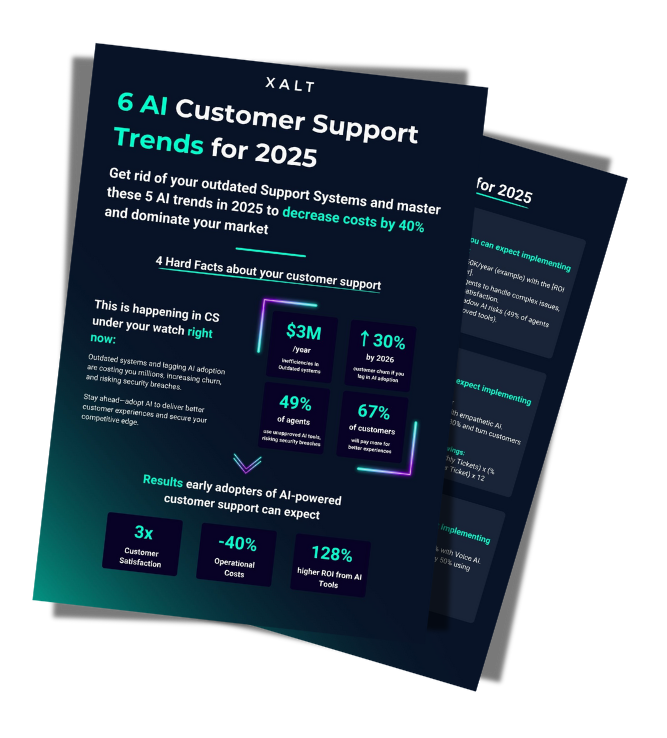
- Customer Satisfaction: AI can triple customer satisfaction.
- Operational Costs: Reduce operating costs by up to 40 % through AI-driven processes.
- ROI: Companies using AI tools report a 128 % higher ROI.
- Assess integration requirements: Ensure that the portal can be seamlessly integrated with your CRM, ERP, or collaboration tools.
- Test and iterate: Roll out the portal to a small group, gather feedback, and optimise the solution before full implementation.
Conclusion: Your portal, your competitive advantage
By 2025, 90% of B2B interactions will take place via portals (Statista, 2023). Companies that hesitate risk falling behind competitors who have already optimised their processes and increased the satisfaction of their employees and customers.
Download our exclusive whitepaper '6 AI Customer Support Trends for 2025' now and find out how you can reduce costs by 40% and triple customer satisfaction by using AI-based portal solutions.
6 AI Customer Support Trends for 2025
Reduce costs, increase customer satisfaction and impress with AI-supported support.