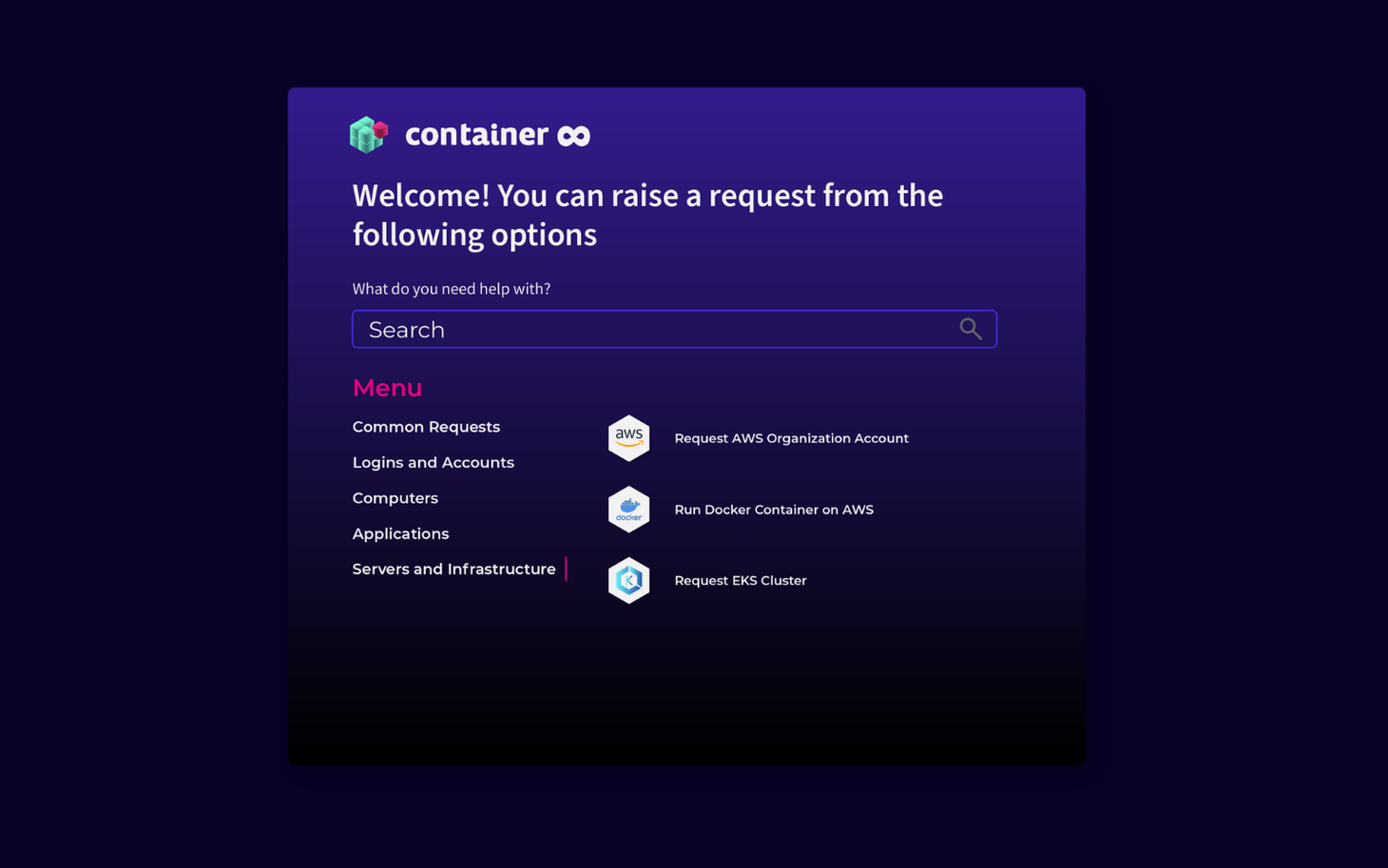
Today, companies face a flood of administrative tasks and inefficient processes that hinder productivity and impede the achievement of core objectives. In this article, we highlight the challenges that arise without a Self-Service and how these systems can provide an effective solution.
The importance of Self-Service solutions
Managing administrative tasks in companies is increasingly complex and time-consuming. Inefficient processes can not only reduce employee productivity but also negatively impact the overall performance of a company. In the face of these challenges, a Self-Service system offers a way to optimise processes and increase efficiency.
Detailed examination of Self-Service systems
What is a self-service?
A self-service is designed to automate processes and enable direct access to key information and tools. They can be divided into three main categories:
- IT Service Management (ITSM)
- Customer Support
- HR Employee Self-Service (ESS)
Further subcategories, such as a developer self-service, complement these main categories. Learn more in this article.
IT Service Management (ITSM) Self-Service
ITSM self-service allows employees to manage IT-related requests independently, without having to involve the IT department directly. This includes resetting passwords, requesting software access, or reporting system outages. This automation reduces the workload of the IT department and speeds up problem resolution.
Customer Support Self-Service
This self-service is aimed at end customers and gives them the opportunity to resolve common questions themselves and solve simple problems without direct customer service. This not only increases customer satisfaction but also relieves the customer service team.
HR Employee Self-Service (ESS)
ESS enables employees to access HR-related information and processes directly, such as updating personal data, submitting leave requests, or viewing payslips. This promotes employee autonomy and relieves the HR department.
Challenges without self-service systems
Overload from administrative tasks
Many companies spend a significant amount of time on administrative tasks, which affects productivity. Studies show that promoting employee well-being can increase productivity by up to 21%, offering a solution here through automation.
Inefficient communication and information systems
Unclear communication channels and the use of multiple tools can lead to information loss and longer processing times. A central self-service system serves as a "single point of truth" and improves efficiency.
Ensuring data accuracy and availability
Effective data management is crucial for reducing workload. These systems enable direct data access, leading to faster decision-making and consistent, error-free information.
Hindered access to tools and apps
Long waiting times for necessary tools and apps can hinder performance and innovation. Such a system enables quick and transparent access to the required resources.
Which tools can be used to create self-services?
Implementing an effective system requires selecting the right tools that can cover the specific needs of a business. There is a wide variety of software solutions on the market that enable the creation and management of systems. The following introduces some of the most common tools, with a particular focus on Jira Service Management.
Jira Service Management
Jira Service Management, developed by Atlassian, is one of the leading platforms for managing IT service requests, specifically tailored to the needs of ITSM teams. It enables fast and efficient processing of requests and offers comprehensive features for process automation. Key features include:
- Automated workflows: Enable fast processing of requests by automating recurring tasks.
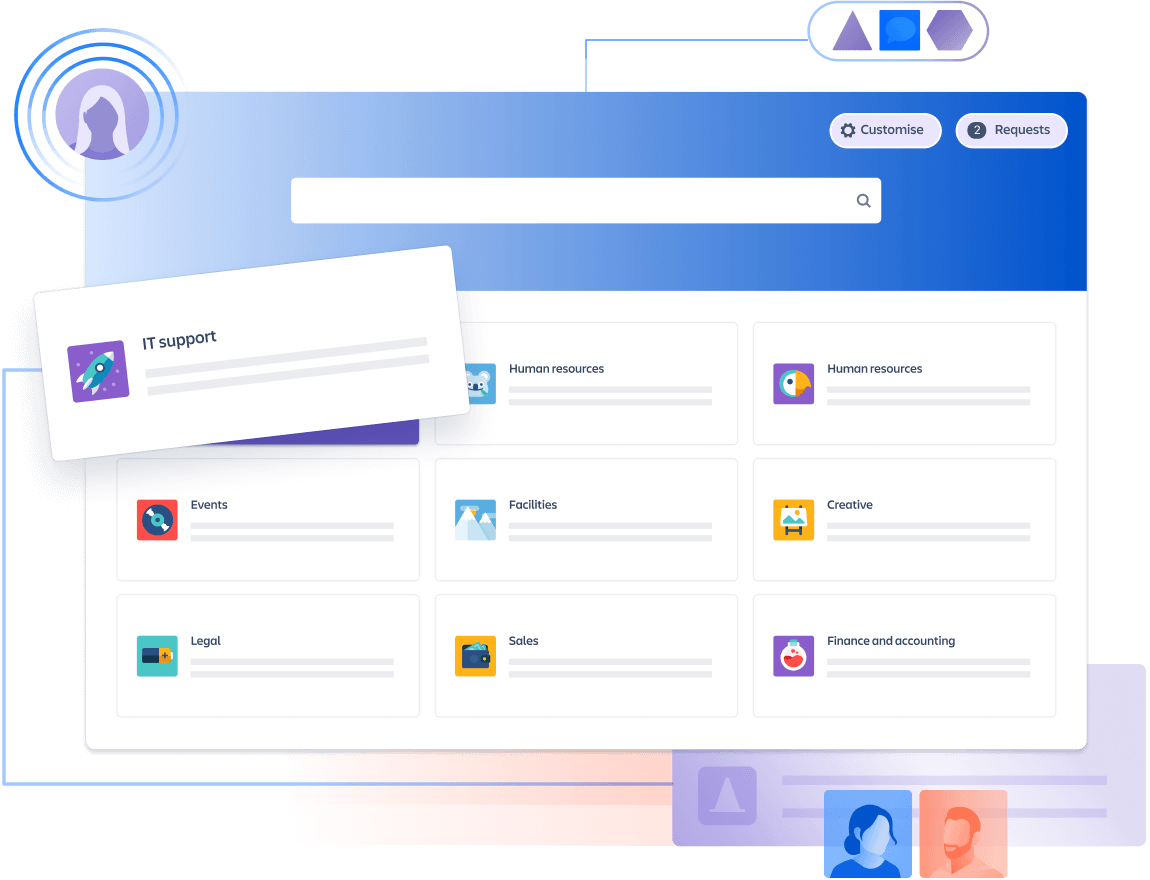
- Self-service portals: Allow employees and customers to submit requests independently and track the status of their requests in real time.
- Integration with Confluence: Provides access to a comprehensive knowledge base, enabling users to quickly find answers to frequently asked questions.
- Customisable dashboards: Provide an overview of all incoming requests and their processing status, increasing transparency and simplifying administration.
Thanks to these extensive features, Jira Service Management is particularly suitable for increasing the efficiency of departments.

Self-service for business teams
Increase the autonomy and efficiency of your business teams through the automation of workflows and core processes with a self-service
Other providers for creating self-services
In addition to Jira Service Management, there are several other tools suitable for creation:
ServiceNow
ServiceNow is a widely used platform for IT service management. It offers comprehensive features for the automation and management of IT services and enables the creation of self-service portals that improve user experience and reduce the workload of the IT department.
Zendesk
Zendesk is a popular tool for customer support. It enables the creation of knowledge bases and portals that provide customers with access to important information and solutions without having to use direct support.
Conclusion
Implementing a self-service system can significantly increase the efficiency and satisfaction of your employees. If you want to take advantage of such a system, now is the right time to act. Rely on such portals to optimise administrative processes, improve communication, manage data accurately and facilitate access to tools.
The choice of the right tool depends on the specific requirements and budget of your company. However, tools such as Jira Service Management, ServiceNow and Zendesk offer comprehensive features that enable the implementation of an effective system.