Efficiency and autonomy play a central role in today's software development. A concept that is gaining increasing importance is "Developer Self-Service". But what exactly does this term mean, and why is it so important? In this article, we will thoroughly examine the definition, benefits, and workings of Developer Self-Service.
What is Developer Self-Service?
A Developer Self-Service is an environment or platform that enables developers to independently access resources, tools, and services without constant support from other teams or departments. This includes, among other things, setting up new development environments, accessing test data, and implementing automation tools. The main idea is that developers can manage and adapt their working environment themselves, which leads to a significant increase in efficiency.
Why is a Developer Self-Service worthwhile?
Introducing a Developer Self-Service brings numerous benefits that go far beyond simple time savings:
Time savings
Developers no longer have to wait for approval or provision of resources by other departments. This reduces waiting times and significantly accelerates the entire development cycle.
Autonomy and motivation
The ability to independently access required resources increases developer autonomy. This leads to higher motivation and satisfaction, as developers can shape their work according to their own preferences and at their own pace.
Error minimisation
Standardised processes and automated workflows help reduce human error sources, resulting in more stable and reliable applications.
Flexibility and scalability
A Developer Self-Service allows companies to flexibly and efficiently scale development resources through automation. This is particularly advantageous in rapidly growing companies or in projects with changing requirements.
Who is Developer Self-Service suitable for?
A Developer Self-Service is particularly suitable for larger companies and organisations that manage complex software development projects. These include:
Development teams
The primary users are developers who benefit from quick and easy access to development resources.
IT departments
IT departments can work more focused and increase their efficiency by being relieved of administrative tasks, such as provisioning development resources.
Product managers and project leaders
Product managers and project leaders benefit from faster development cycles and greater flexibility in planning and implementing projects.
What types of Developer Self-Services are there?
There are various forms of Developer Self-Service, which are tailored to the needs and structures of a company:
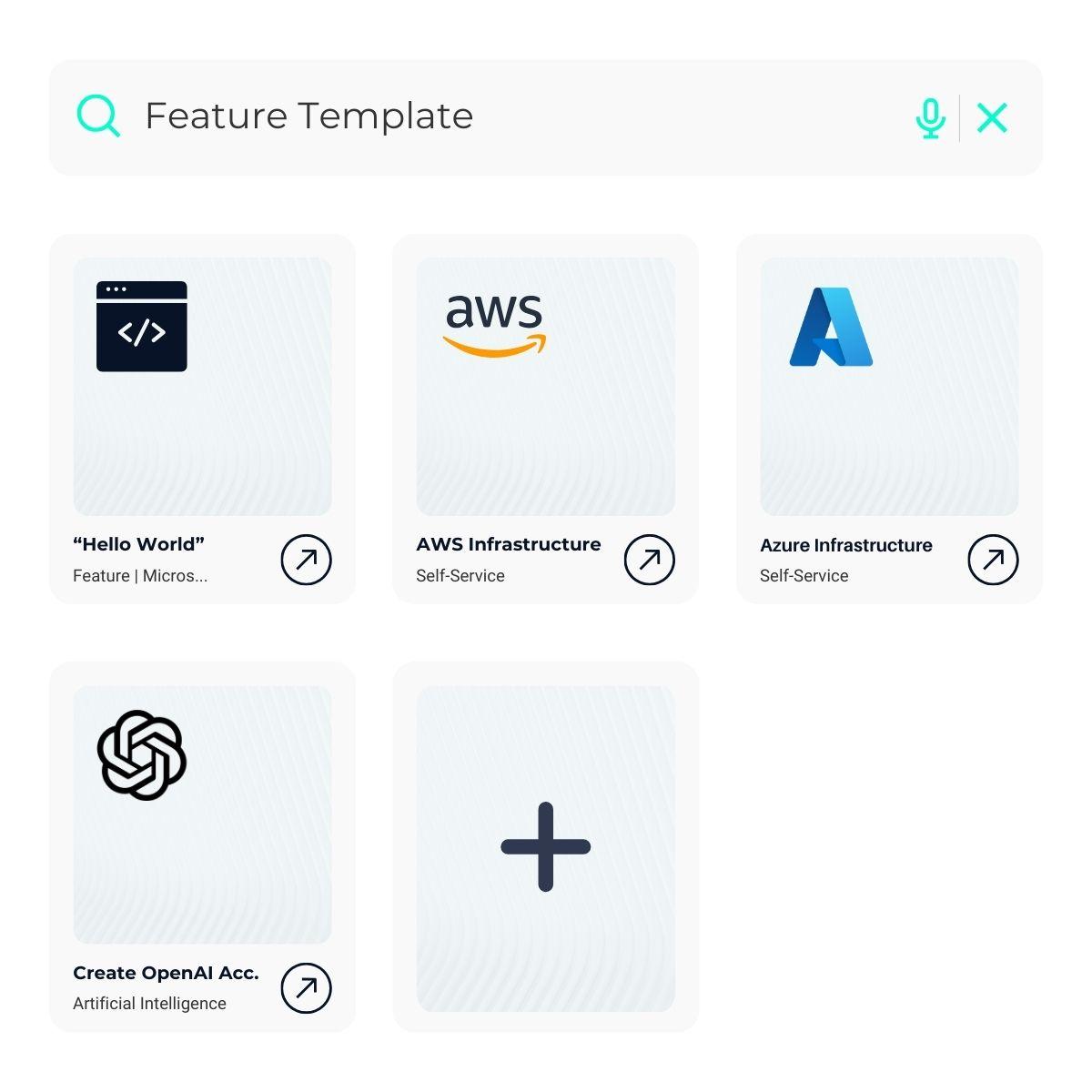
Infrastructure Self-Service
Developers are given access to cloud resources and infrastructure components such as servers, databases, and networks.
Platform Self-Service
This involves providing technologies that help developers test and deploy their applications. (For example, based on Kubernetes & Docker).
Tooling Self-Service
Developers gain access to a wide range of tools and services that support the development process, such as CI/CD pipelines, monitoring tools, and debugging tools.
What are the benefits of Developer Self-Service?
Increased productivity
The ability to access required resources quickly and without delay significantly increases the overall productivity of the team. By having direct access to these resources, developers can work more efficiently and advance their projects faster, leading to a higher overall quality of the developed software.
Cost savings
By reducing administrative tasks and using resources more efficiently, companies can save significant costs. Developers have more room for creative solutions and innovations, as they are not restricted by administrative hurdles, which contributes to the optimized use of company resources.
Promoting innovation
A flexible and autonomous work environment fosters innovation and enables developers to find creative solutions and try out new technologies. This autonomy and flexibility in using tools and resources significantly improve working conditions and allow developers to design and optimize their work environment according to their own needs.
Faster onboarding
New developers can get up to speed more quickly, as they have immediate access to the necessary resources. This significantly reduces the onboarding time and enables a quick start on new projects.
Better working conditions
Through autonomy and flexibility in using tools and resources, working conditions improve significantly. Developers can design and optimize their work environment according to their own needs.
Challenges that can be solved with a Developer Self-Service
The implementation of a Developer Self-Service can effectively address many of the most common challenges in software development. Here are some of the key problems that can be solved with this approach:
Slow provisioning of development resources
In traditional development environments, it can take days or even weeks for developers to gain access to the required resources. A Developer Self-Service enables immediate provisioning, allowing developers to start their work faster.
Dependencies and bottlenecks
Developers are often dependent on other teams or departments to complete certain tasks or obtain resources. These dependencies can lead to delays and frustration. With a Developer Self-Service, developers can work independently and autonomously, thereby avoiding bottlenecks.
Lack of standardization
Without standardized processes, inconsistencies and errors can occur in development. A Developer Self-Service ensures that all developers have access to the same standardized resources and tools, which increases the quality and reliability of the software.
Complex and time-consuming configurations
Setting up and configuring development environments can be complex and time-consuming. Automation tools within a Developer Self-Service significantly simplify this process and reduce manual effort.
Security and access management
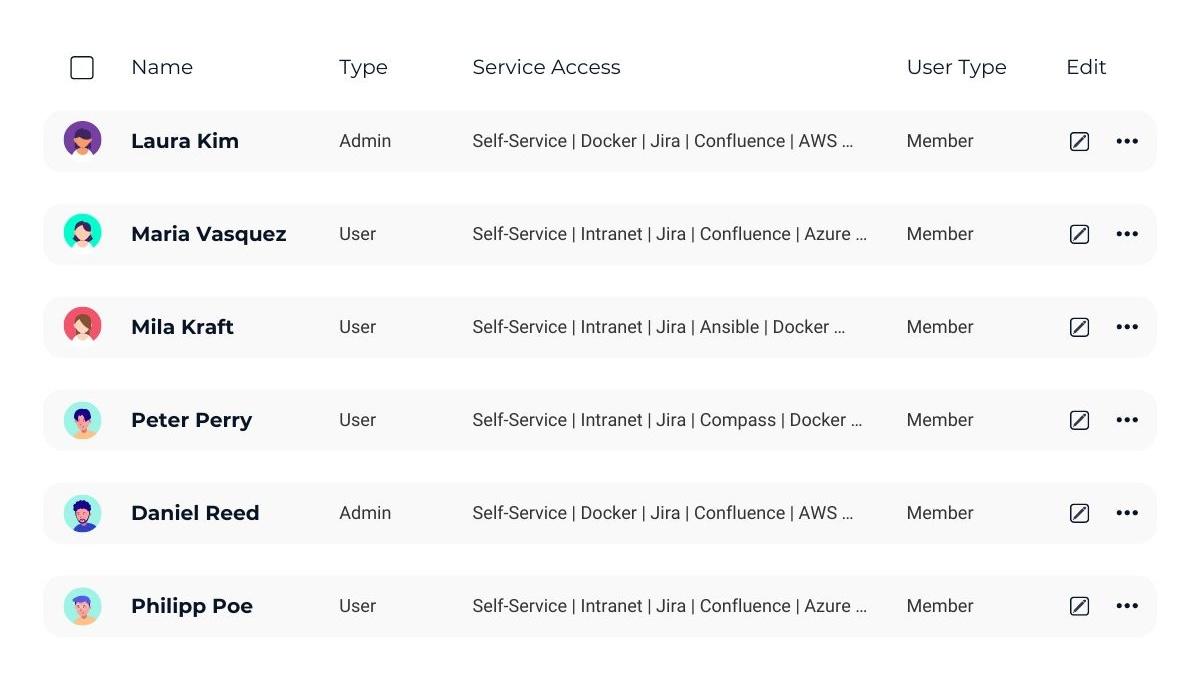
Managing access rights and ensuring compliance with security policies can be a major challenge. A Developer Self-Service offers integrated solutions for secure access management, ensuring that only authorized users can access the resources.
Scalability of development resources
In growing companies or projects with changing requirements, development resources must be able to be scaled quickly and flexibly. A Developer Self-Service enables efficient scaling of resources to meet the needs of the business.
Knowledge silos and lack of collaboration
In many companies, knowledge silos exist that hinder collaboration and knowledge exchange. A Developer Self-Service promotes an open and collaborative culture by enabling developers to easily access shared resources and tools.
By addressing these challenges, a Developer Self-Service makes a significant contribution to improving efficiency and quality in software development.
Success Story: Container8
Learn how Developer Self-Service was successfully implemented in BSH Cloud Provisioning.

What are the disadvantages of a Developer Self-Service?
Despite the numerous benefits, the implementation of a Developer Self-Service can also come with some challenges and disadvantages:
Initial investments and implementation costs
Setting up a Developer Self-Service requires significant initial investments in hardware, software, and infrastructure. Companies must also invest in training their employees to ensure they can effectively use the new tools and processes. Implementation can be time-consuming and costly, particularly for smaller businesses with limited resources.
Security risks and compliance
A Developer Self-Service enables developers to access many resources directly, which can lead to potential security risks. Without appropriate security measures, sensitive data could be compromised. It is therefore essential to implement strict security policies and access controls to prevent the misuse of resources and ensure compliance with regulatory requirements.
Complexity of administration
Managing a Developer Self-Service can be complex, especially in large enterprises with many users and projects. It requires continuous monitoring and maintenance to ensure that the platform runs smoothly and all resources are used efficiently. This can mean additional administrative effort for the IT department.
Resistance to change
Introducing a Developer Self-Service often requires a change in working methods and corporate culture. Employees accustomed to traditional working methods may resist the new processes and tools. This can lead to resistance and initial difficulties during implementation. It is important to develop change management strategies to promote employee acceptance and engagement.
Read here how a Developer Self-Service was introduced in a globally operating company: Case Study Change Management - Developer Self-Service
Dependence on technical solutions
A Developer Self-Service relies heavily on technical solutions and automation tools. If these systems fail or do not function correctly, it can hinder the entire development work and lead to delays. Companies must therefore ensure that they have reliable and robust systems and regularly perform backups and maintenance.
Lack of individual support
As a Developer Self-Service aims to enable developers to work independently, there may be a lack of individual support. Developers may have difficulty solving specific problems if they do not receive the necessary help or guidance. It is therefore important to offer additional support options such as knowledge bases, forums, and direct assistance.
How does a Developer Self-Service work?
https://youtu.be/eF1ckK846PQ?feature=shared
Platforms & automation
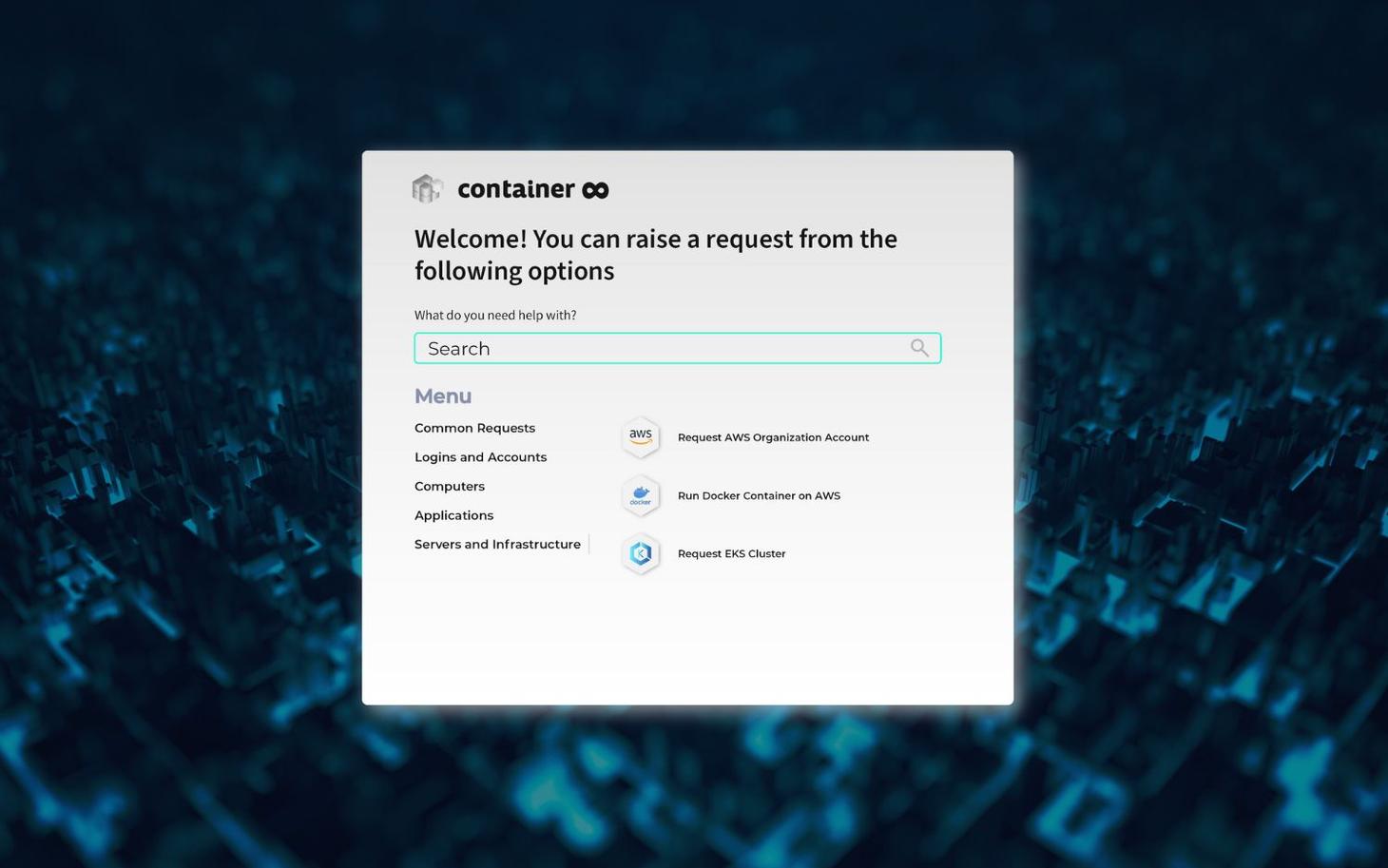
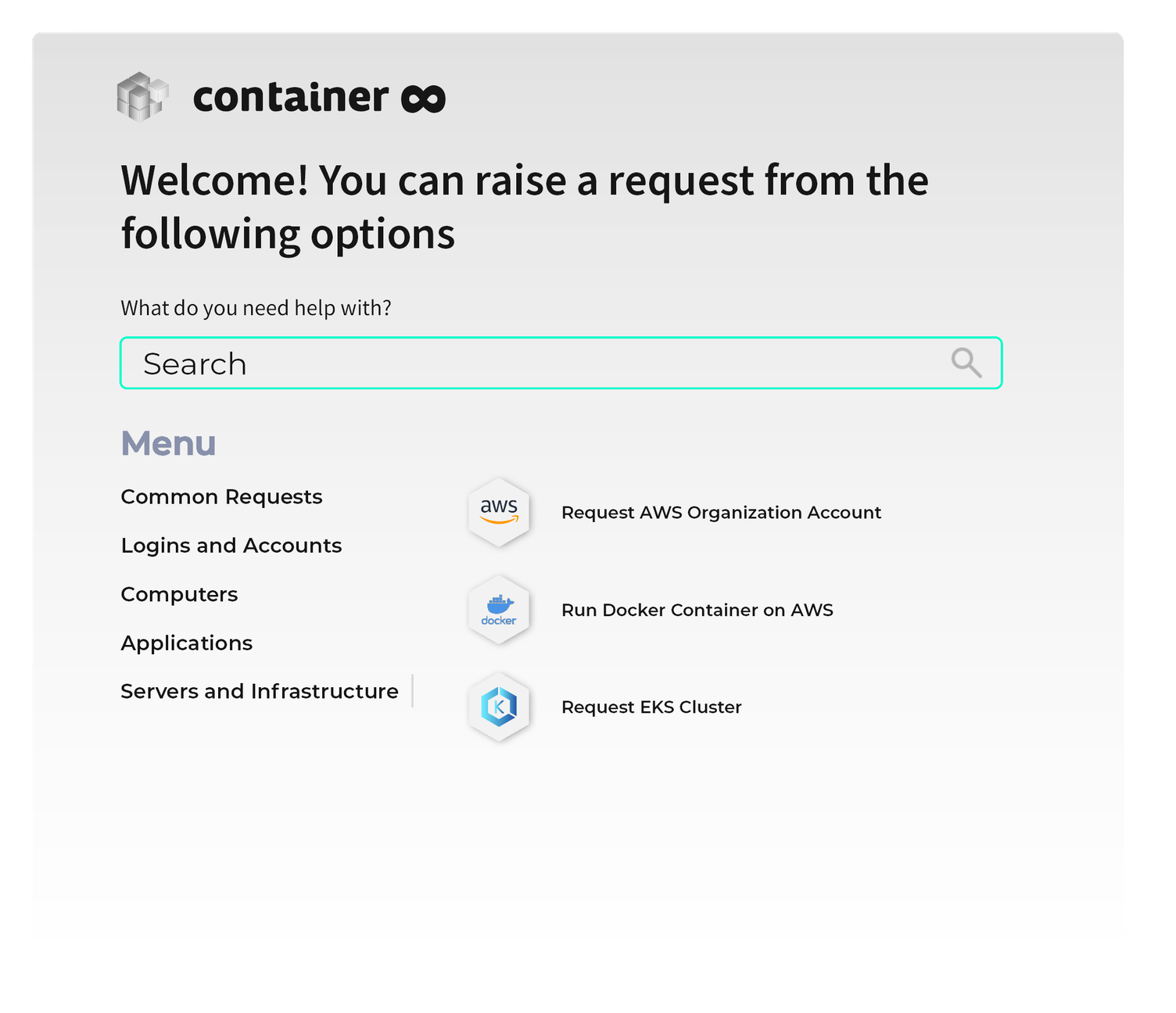
A Developer Self-Service works by providing a central platform or portal that integrates all necessary resources and services. Self-service portals are mostly web-based platforms (such as Jira Service Management, Container8) that offer developers easy access to resources. Through a user-friendly dashboard, users can, for example, start new projects, configure development environments, and access tools and data; and do so without the support of the IT department or process stakeholders.
In addition, automation plays a central role in a Developer Self-Service. Tools such as Ansible, Jenkins or Terraform automate repetitive tasks such as provisioning servers, configuring networks and setting up development environments. This way, automations reduce avoidable errors and ensure consistent and reliable workflows.
Concepts such as Infrastructure as Code (IaC) allow developers to define and manage the entire infrastructure in code form, and with tools such as Terraform and AWS CloudFormation infrastructures can be provisioned quickly and repeatably, which increases scalability and flexibility.
Compliance & Security
Developer Self-Services typically include access controls to ensure that only authorised users can access specific resources. This is achieved through the integration of access management tools (such as XAAM, IAM) and security policies, thereby preventing the misuse of resources and ensuring compliance.

Knowledge Base
Integrated knowledge bases (such as Confluence) and well-maintained documentation are important components of a Developer Self-Service. They provide developers with immediate access to instructions, best practices and solutions, further increasing independence and efficiency and enabling developers to realise their projects faster and more independently.
Revolutionise your development processes
Discover the diverse possibilities of Developer Self-Service with our expertise
Conclusion
A Developer Self-Service offers developers the opportunity to work more efficiently and autonomously. Through quick access to resources and the automation of processes, it increases productivity and satisfaction. Despite initial investments and potential security risks, the benefits, such as time savings, greater flexibility and improved software quality, outweigh the drawbacks.
Implementing a Developer Self-Service requires careful planning and the right tools, such as Jira Service Management, Kubernetes and Terraform. Companies should be aware of the challenges and introduce measures for management and security. Overall, a Developer Self-Service promotes efficiency and innovation in software development and significantly improves the working conditions of developers.