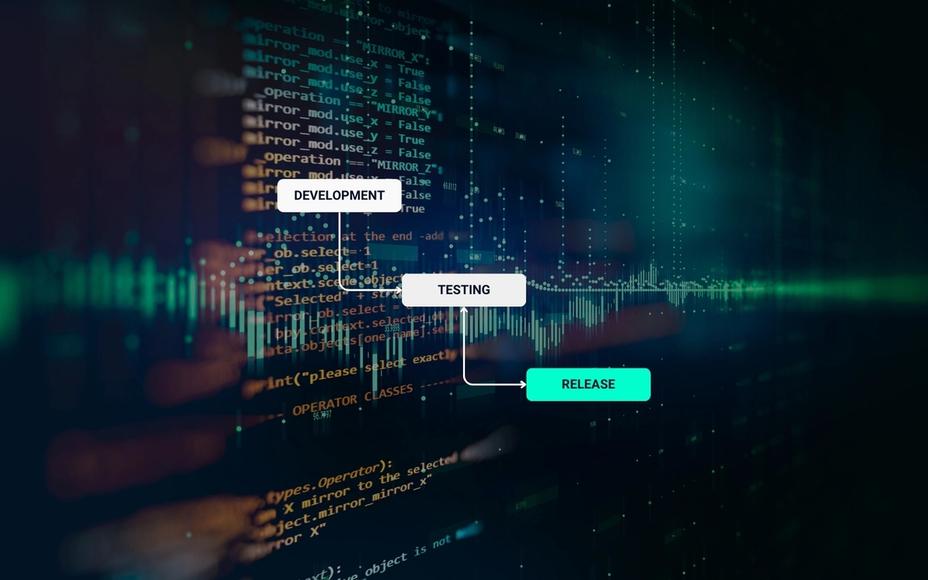
In software development, every second counts. Errors discovered late cost time, money, and sometimes even customer trust. This is where the “Shift Left” approach comes into play: with this DevOps principle, you move testing and quality assurance as far forward (or “left”) as possible in the development cycle. The goal? To detect and fix errors early, before they escalate. In this blog, you will learn why “Shift Left” is essential and how to integrate it step by step into your development processes.
Why do errors always occur at the wrong time?
In software development, one thing is certain: errors happen. The real problem, however, is when they are discovered. Too often, bugs only surface during the testing phase or – even worse – in production. This leads to high costs, lost time, and unnecessary stress.
A typical scenario: A developer has been working on a new feature for weeks. Everything looks good – until a QA test shortly before release uncovers a critical error. Now the frantic search for the cause begins. Teams work overtime, deadlines are pushed back, and customers are annoyed.
What are the most common causes of these situations?
- Late testing: Quality assurance often only takes place after development is complete.
- Lack of collaboration: Developers, QA, and operations work in silos.
- Lack of automation: Manual tests are time-consuming and prone to errors.
- Unclear responsibilities: Who is actually responsible for ensuring the code is error-free?
These problems do not only arise in small projects. Even large, established companies struggle to find and fix errors in a timely manner. And the consequences? They are often severe.
The fatal consequences of late errors
The impact of errors being discovered too late is far-reaching. It is not just about additional work or delays – it is about the foundation of your software development.
- Cost explosion: According to an IBM study, errors discovered in production are up to 100 times more expensive to fix than those found during development. These costs arise from hotfixes, lost revenue, and damaged customer relationships.
- Time loss and stress: If your team is constantly “putting out fires,” there is no time for innovation. Deadlines are missed, and employees burn out.
- Customer satisfaction suffers: Software riddled with errors leaves a bad impression on customers. Trust diminishes, and you lose market share.
- Reputational loss: No one wants to be known for software that “keeps crashing.” Negative publicity can harm your business in the long term.
A real-world example illustrates this: in 2018, a leading FinTech company had to postpone its planned product launch because a critical error was discovered in production. The cost? Over 1 million euros and weakened investor confidence.
However, this situation can be avoided – with the right approach.
Shift Left as the key to problem-solving
“Shift Left” is more than just a buzzword. It is a philosophy that revolutionizes the development process. The core idea: move testing, quality assurance, and feedback loops as far forward as possible, i.e., “to the left” in the development cycle. This ensures that errors are detected and fixed early – before they become costly.
Here is a step-by-step guide on how to implement “Shift Left” in your team:
Step 1: Cultural change – shifting responsibility for quality
Traditionally, responsibility for quality lies with QA teams. In the “Shift Left” approach, this responsibility is shared – developers, testers, and ops teams work together to prevent errors early on.
How to implement it:
- Integrate quality assurance into every phase of the development process.
- Promote collaboration between developers, testers, and operations. Tools like Confluence or Slack can help exchange knowledge and break down silos.
- Raise awareness that everyone on the team contributes to quality.
Example: A DevOps team at Spotify holds regular “Shift Left” workshops in which they jointly discuss testing strategies and quality metrics.
Step 2: Apply Test-Driven Development (TDD)
Test-Driven Development (TDD) is a core strategy of the “Shift Left” approach. Tests are written before the actual code is created.
Benefits:
- Developers know from the outset which requirements the code must meet.
- Errors are detected directly during development.
- The code becomes cleaner and easier to maintain.
How you get started:
- Use frameworks such as JUnit, PyTest or Jasmine to write unit tests.
- Ensure that your tests are automated and integrated into CI/CD pipelines.
Step 3: Automate tests and feedback loops
Manual testing is time-consuming and prone to errors. Automation is the key here. With automated tests, you can verify every change immediately and respond to issues more quickly.
Recommended tools:
- CI/CD systems: Jenkins, GitLab CI/CD, GitHub Actions.
- Test automation: Selenium, Cypress.
- Code analysis: SonarQube, CodeQL.
Example: A developer implements a new feature. As soon as the code is pushed to the main branch, the CI system automatically runs tests and reports any errors immediately. The developer can fix these directly – without losing time.
Step 4: Introduce peer code reviews
Code reviews are a simple but effective way to detect errors early on. A second opinion helps avoid blind spots.
Best practices:
- Create clear guidelines for code reviews (e.g., checklists).
- Use tools such as Bitbucket or GitHub Pull Requests for reviews.
- Foster an open feedback culture within the team.
Step 5: Focus on Security and Performance
“Shift Left” applies not only to functional tests – security and performance must also be checked early on.
Security measures:
- Integrate security scans into your CI/CD pipeline. Tools such as OWASP ZAP or Snyk can help.
- Conduct penetration tests regularly.
Performance tests:
- Use tools such as K6, JMeter or Gatling to ensure that your application remains stable under load.
Step 6: Continuous Learning and Improvement
“Shift Left” is an iterative process. Regularly analyse your sources of errors and optimise your processes.
Practical tips:
- Hold retrospectives after each sprint to gather insights.
- Document best practices in a shared wiki (e.g., Confluence).
- Seek feedback from your team and adjust your strategy accordingly.
Working Title: Get started with “Shift Left” today
With “Shift Left”, you lay the foundation for high-quality, error-free software. Start small – for example, with automated unit tests – and expand your processes step by step.
Next steps:
- Set up a CI system and automate your tests.
- Integrate peer code reviews into your workflow.
- Create a culture where quality comes first.
Related content:
- How you can optimise your processes with DevOps.
- Introduction to Test-Driven Development (Martin Fowler).
Conclusion: Better software with “Shift Left”
Shift Left is more than just a strategy – it is a mindset that puts your team on the path to success. By integrating testing and quality assurance early on, you avoid late-stage errors, save costs, and deliver software that delights your customers. What are you waiting for?
With this comprehensive guide, you have all the tools you need to get started right away!