Businesses need powerful tools to manage customer inquiries, optimise internal processes, and keep track of their IT infrastructure. While Jira Service Management from Atlassian is a popular solution, there are a variety of alternatives on the market. But which service management platforms are available, and which one should I use? In this article, we compare Jira Service Management vs. ServiceNow vs. Zendesk.
Jira Service Management (JSM)
Jira Service Management is an IT Service Management platform (ITSM) from Atlassian, designed to help IT teams deliver fast and efficient services. It integrates incident management, problem management, change management, and asset management in a central solution.
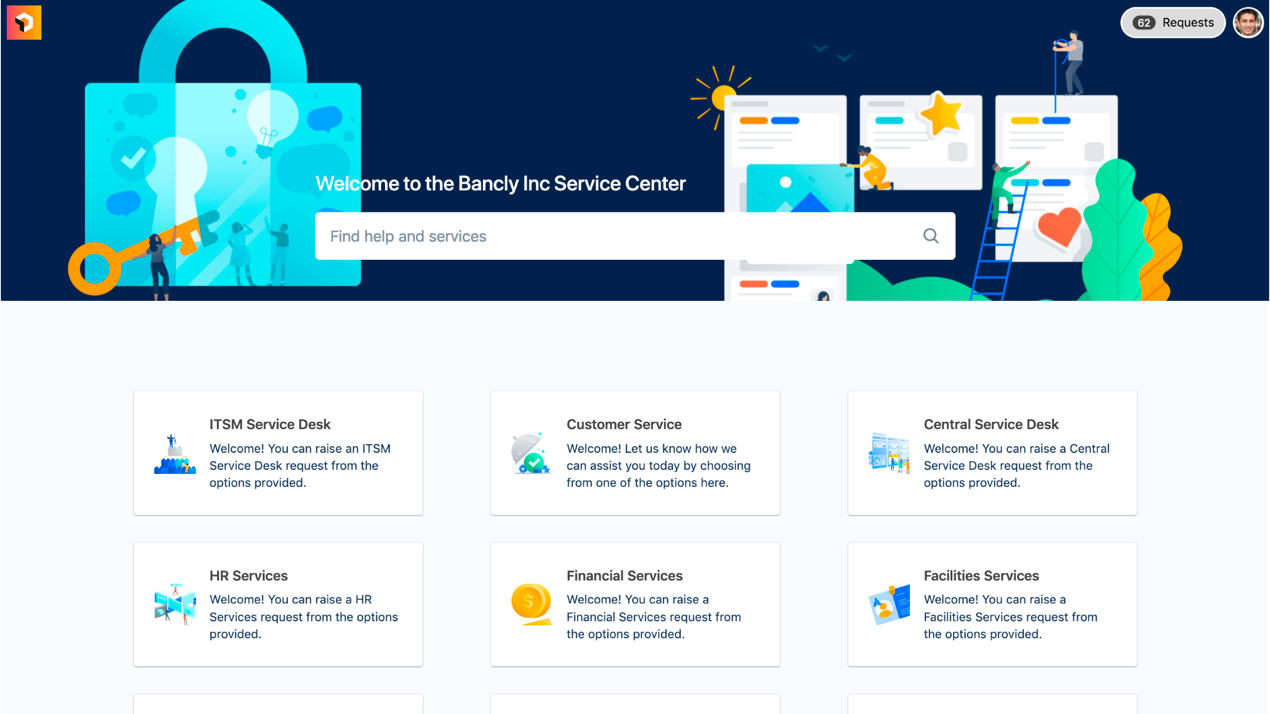
The platform offers self-service portals for end users, automated workflows to optimise service processes, extensive reporting and analytics features, and the ability to adapt to various ITSM frameworks such as ITIL. JSM enables seamless collaboration between IT operations and development teams, supports agile methods, and can be integrated with other Atlassian products and third-party tools to provide a holistic view of the IT service lifecycle.
Advantages
- Tight integration with other Atlassian products and open API interface to additional apps and platforms
- Customisable workflows and automations (e.g. for process digitalisation/automation)
- Extensive reporting and analytics features
- Scalability for growing businesses
- AI-powered virtual agents/platform that directly answers frequently asked questions and automatically handles support interactions
- Integration with Confluence allows you to create an extensive support portal and help centre
- Comprehensive enterprise service management
Disadvantages
- Steep learning curve for new users
- Can be overkill for small teams
- Limited native features for asset management
Who is Jira Service Management suitable for?
Jira Service Management is particularly suitable for medium to large enterprises, especially those with a strong focus on software development and IT service management.
It is ideal for organisations that require close integration between development and service departments. With Jira Service Management, it is also possible to create self-services (Employee Self-Service; ITSM; Customer Support) for teams and it can be configured for a wide variety of specific use cases (e.g. Developer Self-Service).
When is Jira Service Management the best choice?
Atlassian ecosystem:
If your company already uses other Atlassian products such as Jira Software, Confluence or Bitbucket, Jira Service Management offers seamless integrations. This enables a smooth flow of information between development, operations and service teams, significantly improving collaboration and efficiency.
Complex, customisable workflows:
For organisations with specific or complex service processes, Jira JSM offers highly customisable workflows. You can design processes for incident management, problem management, change management and more to suit your exact needs. This allows for a precise representation of your internal workflows and best practices.
DevOps integration:
If you aim for close integration between development and service management, JSM is ideal. It enables a direct connection between service requests and development tasks, reducing response times and improving communication between teams. This effectively supports agile and DevOps practices.
Extensive integration options:
Jira Service Management offers a wide range of integrations with common tools and platforms. This includes:
- Cloud services: Seamless integration with Azure and AWS for a cloud-based service management platform.
- Microsoft products: Connections to Microsoft Teams, Office 365 and other Microsoft tools for improved productivity.
- Communication tools: Integration with Slack for quick notifications and collaboration.
- Monitoring tools: Connection to monitoring tools for automated incident creation.
- Other apps: An extensive ecosystem of third-party apps in the Atlassian Marketplace extends functionality as needed.
These integration options allow you to use Atlassian's tool as a central hub for your entire IT service infrastructure, increasing efficiency and providing a unified view of all service-related activities.
Prominent features
- Customisable service desks and customer portals
- Incident, problem and change management
- SLA tracking and management
- Extensive automation options
- Best practice templates for service desks such as HR, marketing, sales, legal, etc.
Integrations and Marketplace
The service management platform benefits from the extensive Atlassian Marketplace with over 3,000 apps and integrations. This enables high customisability and extensibility of the system.
Learn more about self-service with JSM
Increase employee autonomy, meet compliance standards and create transparency with our central information platform.
Artificial intelligence (AI)
With the integrated AI engine, which uses powerful language technology and generative AI, a JSM virtual agent provides both agents and help-seekers with fast conversational support.
- Intent templates: Efficiently create support scenarios based on common issues and historical ticket data.
- AI answers beta: Use generative AI to automatically answer queries, supported by your knowledge base and Atlassian Intelligence.
- Automated web requests: Reduce ticket escalations by automating common actions such as software access requests.
- Analytics: Monitor and optimise the performance of your virtual agent with detailed insights.
- Low/No-Code Workflow Builder: Quickly implement new workflows thanks to a user-friendly interface and pre-built templates.
- Chat environment: Provide personalised, interactive support in a modern chat interface.
Through intelligent ticket categorisation, prompt answers to frequently asked questions, and targeted routing of complex cases to subject matter experts, they minimise response times and improve customer satisfaction.
The seamless integration with Jira and the adaptability to company-specific requirements make these AI agents a valuable asset for businesses looking to optimise their service processes while reducing operational costs.
ServiceNow
ServiceNow is a cloud-based platform for digital workflows that focuses on the automation and optimisation of business processes.
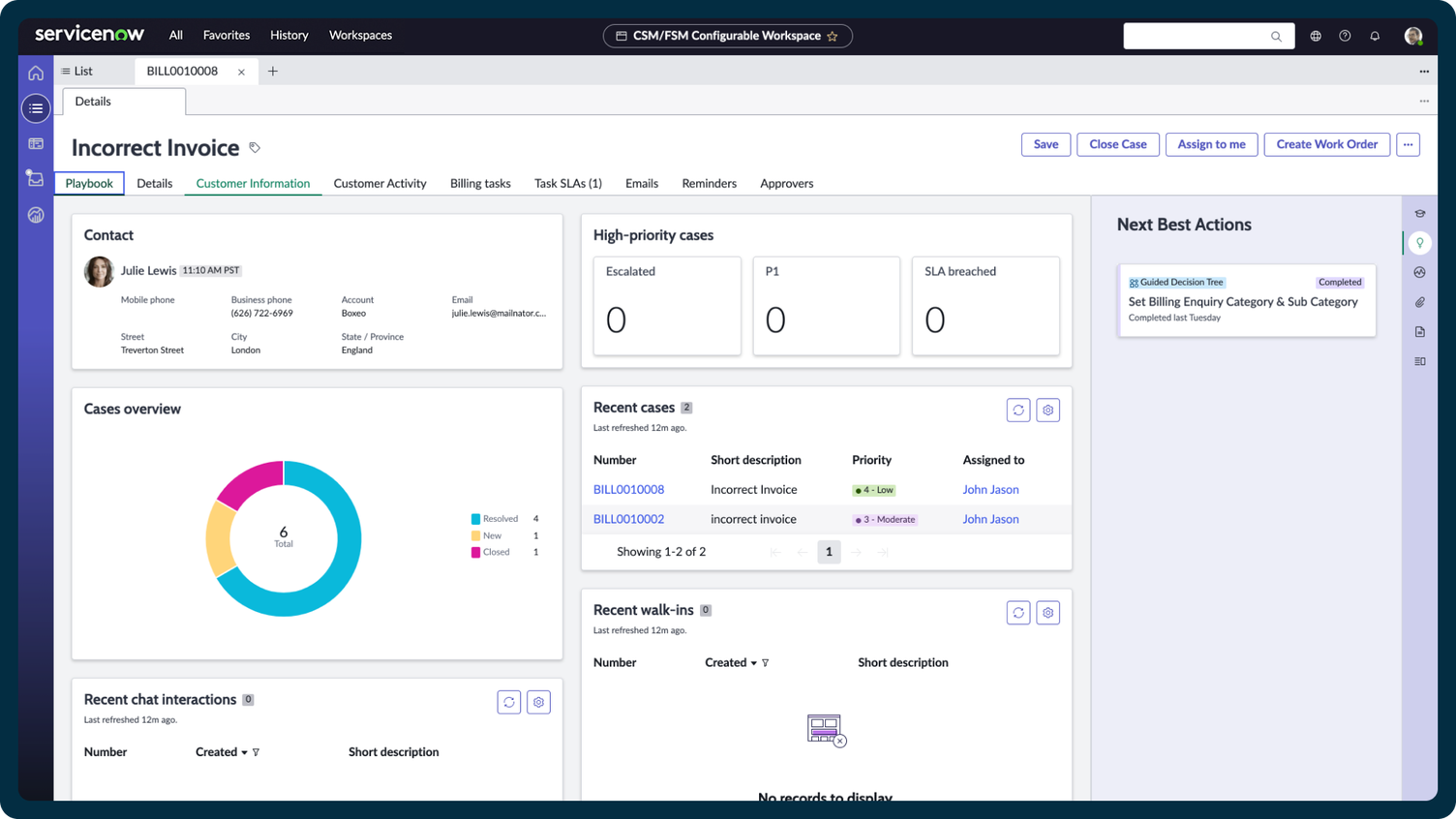
ServiceNow offers a comprehensive solution for IT Service Management (ITSM), Customer Service Management (CSM), HR Service Delivery, and other business functions. The Service Management platform enables businesses to digitise, automate, and optimise workflows to increase efficiency and improve service quality.
Core functions include Incident Management, Problem Management, Change Management, Asset Management, as well as Self-Service portals for end users. ServiceNow also supports AI-driven automation, predictive intelligence, and advanced analytics for data-driven decision-making.
Advantages
- Comprehensive solution as an Enterprise Service Management platform
- Strong capabilities in business process automation
- Robust reporting and analytics functions
- High scalability for large enterprises
Disadvantages
- High complexity and implementation effort
- Relatively high costs, particularly for smaller businesses
- May be overkill for simple service desk requirements
Who is ServiceNow suitable for?
ServiceNow is ideal for large enterprises and corporations seeking a comprehensive platform for the digitalisation and automation of their business processes. It is particularly suitable for organisations with complex IT infrastructures and cross-functional service requirements.
When is ServiceNow the best choice? If …
Holistic Enterprise Service Management:
… you need a comprehensive platform that goes beyond IT and integrates services for HR, Finance, Facility Management, and other departments. ServiceNow provides a unified approach to enterprise-wide service management.
Cross-departmental Automation:
… you want to automate complex, cross-departmental workflows. The platform enables the creation and management of end-to-end processes that span multiple business areas, increasing efficiency and consistency.
Scalability for Large Enterprises:
… you are looking for a solution for a large, possibly globally operating company. ServiceNow is designed to manage enormous amounts of data and users without sacrificing performance. It offers robust governance and compliance features that are essential for large organizations.
Advanced Analytics Capabilities:
… you need detailed insights and predictions for your service processes. ServiceNow's AI and machine learning capabilities enable predictive analytics and data-driven decision-making at the enterprise level.
Adaptability and Extensibility:
… you require a highly customizable platform that can adapt to specific and changing business requirements. ServiceNow offers extensive options for customizing and extending functionality.
Prominent features
- IT Service Management (ITSM) and IT Operations Management (ITOM)
- Customer Service Management
- HR Service Delivery
- Governance, Risk, and Compliance (GRC)
- Custom App Development
Integrations and Marketplace
ServiceNow offers its own App Store with a wide range of integrations and extensions. It also supports numerous out-of-the-box integrations with common enterprise applications.
Artificial Intelligence
ServiceNow places a strong emphasis on AI and machine learning with its "Now Intelligence" platform. These AI features include:
- Virtual agents for improved customer service
- Predictive intelligence to forecast trends and issues
- Automatic categorisation and routing of requests
- AI-driven decision support for employees
Zendesk
Zendesk is a cloud-based customer service management platform that focuses on improving customer relationships and experiences.
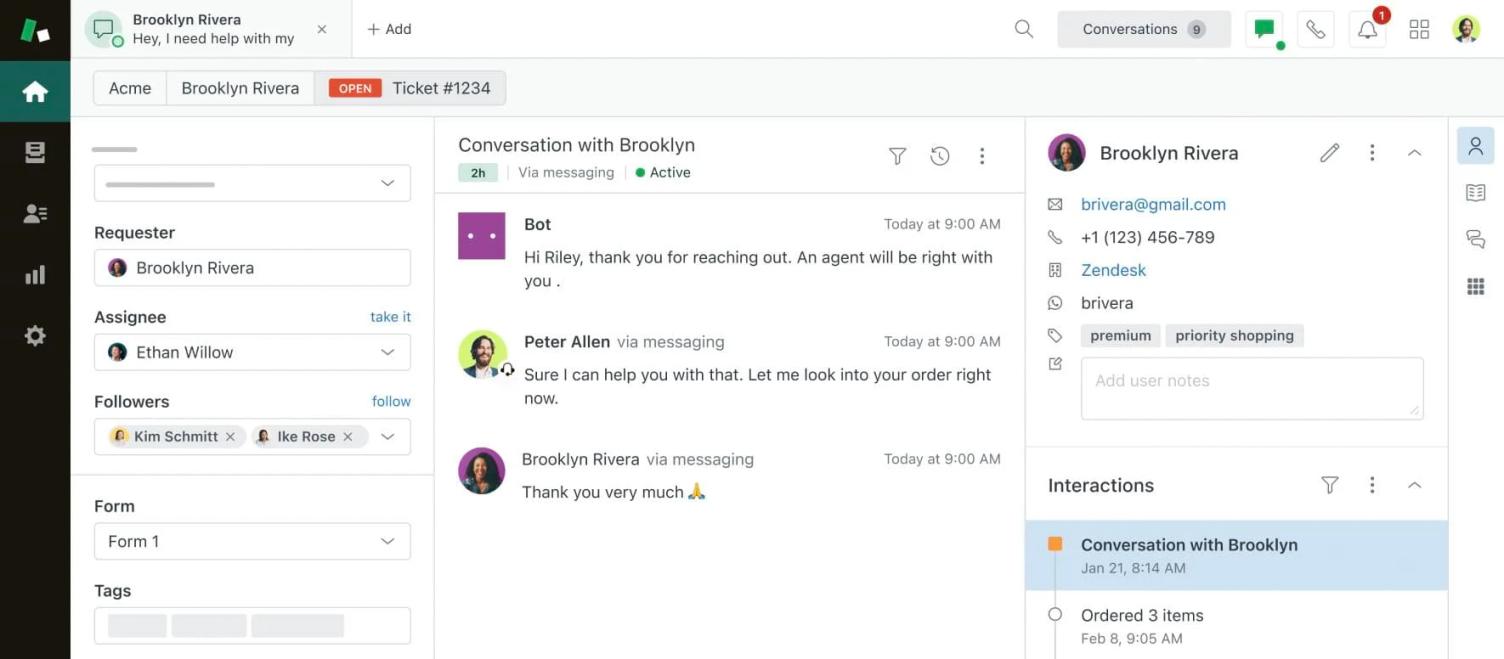
Zendesk offers a suite of products for customer service, sales support, and customer retention. The platform enables businesses to manage and respond to customer inquiries across various channels such as email, phone, chat, social media, and self-service portals.
Key features include a ticketing system, live chat, knowledge bases, community forums, customer satisfaction surveys, and analytics tools. Zendesk also offers AI-driven automation for faster response times and personalised customer interactions.
Zendesk aims to simplify and enhance customer service by consolidating all customer-relevant information and interactions in one central location.
Advantages
- User-friendly interface and easy setup
- Strong focus on customer service and experience
- Flexible pricing for different business sizes
- Comprehensive multichannel support
Disadvantages
- Less comprehensive ITSM features compared to specialised tools
- Limited customisation options for complex workflows
- Restricted features for asset and configuration management
Who is Zendesk suitable for?
Zendesk is particularly suitable for small to medium-sized businesses that place a strong emphasis on customer service. It is also a good choice for companies looking for a user-friendly solution that covers both external customer support and internal IT support requirements.
When is Zendesk the best choice? If …
Customer service focus:
… you are primarily focused on improving customer care and need specialised tools for that purpose.
Ease of use:
… you are looking for a user-friendly solution that can be implemented quickly and is easy to learn.
Scalability:
… you need a flexible platform that can grow with your business, from startups to large organisations.
Omnichannel support:
… you want to centrally manage customer interactions across various channels (email, chat, phone, social media).
Self-service:
… you want to enable customers to find answers independently, e.g. through knowledge bases.
Prominent features
- Ticketing system for customer service and IT support
- Knowledge base and self-service portal
- Multichannel support (email, chat, phone, social media)
- Customer analytics and reporting
Integrations and Marketplace:
Zendesk offers a marketplace with over 1,000 apps and integrations. This enables good extensibility and integration into existing enterprise applications.
Artificial Intelligence:
Zendesk uses AI in various areas of its platform:
- Answer Bot for automated customer responses
- AI-assisted ticket assignment and prioritization
- Sentiment analysis for customer interactions
- Predictive analytics to improve customer service performance
Service management platforms at a glance: Jira Service Management vs ServiceNow vs Zendesk
Each of the tools presented has its own strengths and is optimally suited for different scenarios: The service management platforms: JSM vs ServiceNow vs Zendesk compared.
| Kriterium | Jira Service Management | ServiceNow | Zendesk |
|---|---|---|---|
| Primary target audience | Mid-sized to large enterprises with an IT focus | Large enterprises and corporations | Small to medium-sized businesses |
| Especially suitable for | Businesses in the Atlassian ecosystem. (Can also be used as a standalone solution) | Complex, cross-functional service requirements | Customer service-oriented businesses |
| Strengths | Integration with Atlassian products & most used apps Customizable workflows Scalability | Comprehensive enterprise solution Strong process automation Robust analytics | User-friendliness Multichannel support Flexible pricing |
| Weaknesses | Steep learning curve Complex for small teams | High complexity High costs | Limited ITSM features Restricted customizability |
| Prominent features | Customizable service desks Incident, Problem, Change Management SLA tracking ITSM, ESS, HR, Customer Support (All known use cases can be covered with JSM) Service desk templates for a quick start | ITSM and ITOM Customer Service Management HR Service Delivery Governance, Risk & Compliance (GRC) | Ticketing system, knowledge base, multichannel support |
| Integrations | Extensive Atlassian Marketplace with integrations to all/most commonly used tools & applications | ServiceNow App Store | Zendesk Marketplace |
| AI features | Atlassian Intelligence for automation and predictions; AI agents for specific use cases already available as templates | Now Intelligence for virtual agents and predictive analytics | Answer Bot and AI-powered analytics |
| Implementation effort | Medium to high | High | Low to medium |
| Pricing | Free for up to 3 agents with limited features; Standard from $17.65/agent/month | From $100/month | From $19/month for small teams |
Conclusion: Is there a best service management platform?
Jira Service Management is the best choice for companies that already work in the Atlassian ecosystem or require close integration between development and service management. It offers flexible customization options and is particularly suitable for IT-focused organizations.
ServiceNow is the most comprehensive solution and is best suited for large enterprises with complex, cross-departmental service requirements. It offers the most advanced automation and AI features but also requires the highest implementation effort.
Zendesk is ideal for businesses that place a strong emphasis on customer service and are looking for a user-friendly, quickly deployable solution. It offers a good balance between customer service and IT support features, but its ITSM capabilities are less comprehensive than the other two options.
When choosing the right service management platform, businesses should consider their specific requirements, resources, and long-term goals. Factors such as company size, the complexity of the IT infrastructure, the focus on customer service versus internal IT processes, and the available budget play a crucial role.
Regardless of the choice, it is important that the selected tool offers the ability to grow with the business and adapt to future requirements. The integration of AI features will become increasingly important in the future to enhance efficiency and service quality.