Do you know this: Your team wants an "own AI assistant", but the research ends in three completely different worlds. Atlassian delivers Rovo directly in Jira and Confluence. Anthropic and OpenAI give you SDKs to build it yourself. And OpenClaw builds an open-source scene around self-hosted, universal agents. The names are similar, and so are the promises – but architecture, governance, and the question of who is liable if the agent messes up differ fundamentally.
In this article, we categorize the three basic types of personal AI agents that are most common in the German-speaking enterprise environment in 2026: Atlassian Rovo, OpenClaw, and the agent SDKs from Anthropic and OpenAI. By the end, you will know which basic type suits your situation – before you make a decision.
What exactly is a personal AI agent?
A personal AI agent is a software system that autonomously performs multi-step tasks – not just answering, but acting: writing emails, creating tickets, committing code, conducting web research, coordinating appointments. The difference from a classic chatbot is the agent loop: The agent plans, calls tools, evaluates the result, and plans further – often over minutes or hours, with minimal human input.
Why choosing the right tool is so difficult right now
The market for AI agents is exploding – and with it, the confusion about which model fits which business context.
- The pace of adoption is outpacing governance. According to Gartner, by the first quarter of 2026, around 80% of all newly delivered or updated enterprise applications will embed at least one AI agent – in 2024, it was only 33%. The global market volume for AI agents is estimated at 10.9 to 12.1 billion US dollars in 2026, with an annual growth rate of 44–46% until 2030.
- Governance is lagging behind. According to Gartner, only 21% of organizations have a mature governance model for autonomous agents. Over 40% of agentic AI projects are expected to be discontinued by 2027 – due to unclear business value, exploding costs, or missing risk controls.
- There is no "one agent for everything". Teams confuse embedded productivity agents with universal, self-hosted agents. These are two completely different risk profiles.
- Credit and token models obscure real costs. Consumption-based pricing may seem cheap in sales, but quickly heats up in everyday use – those who do not calculate in advance how many prompts their team actually needs will experience unpleasant surprises on the bill.
- Autonomy without scoping is a security risk. The more an agent is allowed to act independently – shell access, email sending, payment approvals – the more important the question becomes of who sets the permissions and who checks them regularly.
The solution approach: Evaluate the basic type before the feature list
Before comparing individual features, it is worth taking a step back: To which basic type does the tool you are currently looking at belong?
- Embedded suite agents like Atlassian Rovo run within an existing ecosystem and are bound to its data model and permissions – convenient, but limited to this cosmos.
- Agent SDKs from model providers like Claude Agent SDK and OpenAI Agents SDK give you building blocks with which you can build your own production-ready agent – a lot of control, but you need developer resources.
- Autonomous open-source agents like OpenClaw deliver a ready-made, universal agent loop for self-hosting – maximum reach and data sovereignty, but also maximum personal responsibility for scoping.
Once you have understood this basic type, most of the detailed differences – reach, governance, operating model – almost take care of themselves.
Three approaches in direct comparison
| Dimension | Atlassian Rovo | OpenClaw | Agent-SDKs (Claude / OpenAI) |
|---|---|---|---|
| Basic type | Embedded AI layer in the Atlassian suite | Open-source, self-hosted autonomous agent | Model plus agent infrastructure for building yourself (Claude Agent SDK / OpenAI Agents SDK and Responses API) |
| Agentic core | Rovo Agents, Rovo Studio and Rovo Dev | Autonomous loop with more than 100 skills | Agent loop, subagents and handoffs, sessions, hooks and guardrails – Claude emphasises permission gating, OpenAI Agent Mode plus Workspace Agents |
| What it does | Searches, summarizes, and acts within Jira and Confluence | Acts broadly: web, email, files, shell, APIs | Reads files, runs shell, searches the web, edits code, calls MCP – with OpenAI additionally a virtual computer and browser |
| Context foundation | Teamwork Graph with more than 150 billion objects, permissions-aware | No own graph; context is supplied live | MCP servers plus context window, no own graph layer; OpenAI adds a Connector Registry for Drive, SharePoint and Teams |
| Reach | Atlassian ecosystem plus 100+ connectors | Universal, anything you connect | Universal via MCP plus built-in tools; OpenAI additionally broader in the Microsoft and Google environment via Connectors |
| Extensibility | Forge and Rovo Studio | MIT-Skills, freely customizable | Agent Skills and MCP servers in Claude, Custom GPTs, Custom Tools and MCP in OpenAI |
| Interface | Search bar, chat panel, agents in the apps | Messaging-first via WhatsApp, Telegram, Slack | CLI, SDK, IDE or claude.ai for Claude, ChatGPT, ChatKit embeds and API for OpenAI |
| License and model | Proprietary, credit-based (25–150 credits per user) | MIT, free, BYO-LLM | Proprietary; the SDKs are each open source, billing is token- and plan- or seat-based |
| Deployment | Hosted in the cloud by Atlassian | Local or self-hosted | Any runtime, models via the respective provider cloud; OpenAI's agent runtime is also self-hostable |
| Governance and security | Enterprise-grade with Guard, DLP, audit logs and Rovo Chat Security | Large attack surface, scoping is up to the user | Claude with human-in-the-loop checkpoints, hooks and permission gating. OpenAI with guardrails for PII and jailbreaks as well as connector governance |
| Autonomy level | Growing, but limited to bounded and supported actions | High, broad system access | High – Claude with a true agent loop and stop conditions, OpenAI with Agent Mode, but limited message quotas |
| Target audience | Teams that work deeply with Atlassian | Tinkerers and developers who want to self-host | Developers building production agents (Claude) as well as developers and no-code teams (OpenAI) |
Atlassian Rovo: the bound specialist
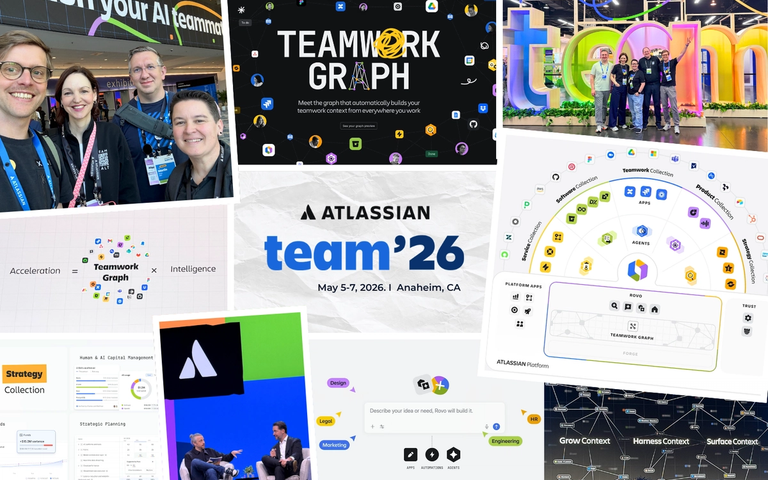
Rovo is not a standalone app, but an AI layer that sits directly in Jira, Confluence and Jira Service Management. Its biggest advantage is the Teamwork Graph – a permissions-aware data model of tickets, pages, people and code that gives Rovo context that a pure LLM would never have. In return, you pay with reach: Rovo only acts within the Atlassian cosmos plus around 100 connectors and settles via a credit system. The standard plan includes 25 credits per user; a chat prompt or an agent execution costs 10 credits each. Mathematically, the budget is exhausted after 7 to 8 interactions per month. Those who want more need a higher package or Rovo Dev separately from 20 US dollars per developer and month.
OpenClaw: the universal self-hoster
OpenClaw pursues the opposite approach: MIT-licensed, self-hosted, bring-your-own-LLM. Instead of a hard-wired graph, the agent receives its context live and works via an open skill mechanism that ranges from web research to shell commands to messaging. This makes OpenClaw by far the most flexible tool in this comparison – and at the same time the one with the largest attack surface. There is no built-in enterprise governance layer; scoping, permissions and audit discipline lie completely with the operator.
Agent SDKs: Claude and OpenAI as a building block model
Anthropic and OpenAI pursue the same basic architectural idea: You do not get a finished product, but a library with which developers build their own agent. Anthropic's Claude Agent SDK provides an agent loop with context compaction for long sessions, subagents for focused subtasks, hooks for integrating your own logic and a permission system for tool calls – including human-in-the-loop stop points for critical actions. OpenAI combines the Responses API with built-in tools such as Web-Search, File-Search and Computer Use with the Agents SDK, which enables handoffs between multiple specialized agents and guardrails for inputs and outputs. Since the update in April 2026, the agent can additionally inspect files, execute commands and edit code in a controlled sandbox, including MCP support, skills and an AGENTS.md concept. Both connect external data sources via the Model Context Protocol. The practical difference lies in the detail: Claude places greater emphasis on explicit permission gating and stop conditions, OpenAI scores with the Connector Registry for companies that are already deeply embedded in Microsoft 365 or Google Workspace.
Practical example: How we test at XALT ourselves
At XALT, we have been running our own personal agent based on OpenClaw internally for several months – nickname "Henry". It runs self-hosted, is connected to our own Atlassian, Slack, and messaging channels, and takes on recurring tasks such as research, appointment preparation, and status updates. The reason we chose the self-hosting approach over a pure SaaS agent: full data sovereignty and the ability to tailor skills precisely to our internal processes, rather than binding ourselves to a fixed feature set. At the same time, this is exactly the point where governance becomes a mandatory task – every new permission, every new channel is consciously approved and documented by us, not granted automatically.
The question is no longer whether your team will get an AI agent, but how much control you retain over it.
- The basic type matters more than the feature sheet. Embedded suite agents, developer SDKs, and autonomous self-hosters solve different problems – do not compare apples with pears.
- Scope and governance are a trade-off. The more an agent can do, the more responsibility lies with the operator to scope it properly.
- Consumption pricing deserves a real upfront calculation. 10 credits per prompt sound harmless until the monthly quota is used up after a week.
- Governance maturity is the bottleneck in 2026, not the technology. With only 21% of mature governance models according to Gartner, the question "Who checks what the agent is allowed to do?" is more important than any new feature.
- Teams that work deeply with Atlassian usually start most easily with Rovo – those who want data sovereignty and maximum flexibility look at open-source agents or their own SDK project.